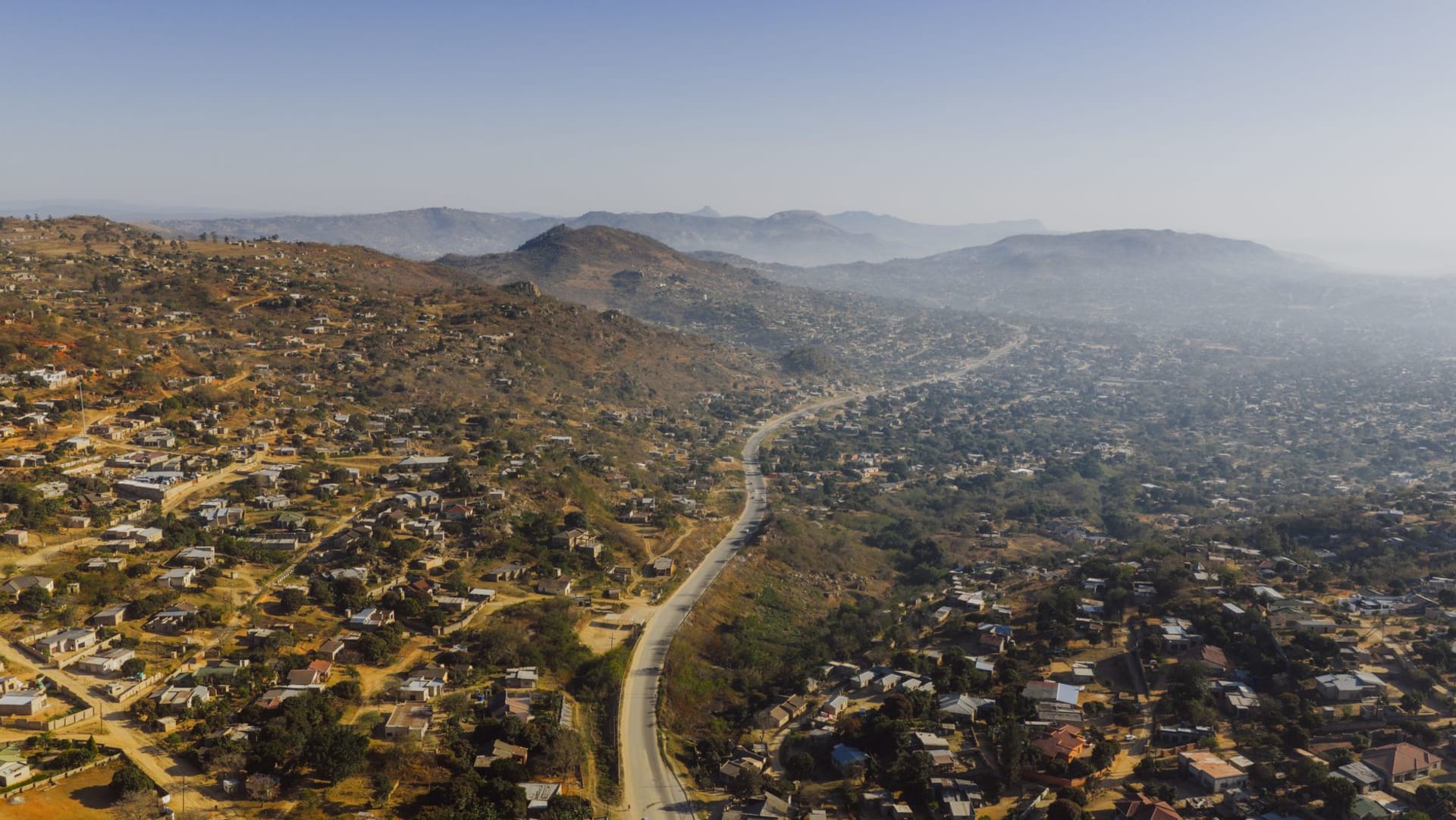
Sibebe Rock
"Standing on Sibebe's summit, Eswatini spreads in every direction and you understand immediately why the country has always been hard to invade."
The first view of Sibebe Rock stopped me midsentence in a conversation about something else entirely. I was on the edge of Mbabane, driving the road north toward the dam, when the rock simply appeared above the treeline — an enormous bare granite dome, the colour of weathered pewter, rising several hundred meters straight out of the surrounding hills with the completeness of something that has never pretended to be anything but enormous. The geological age written into that surface is Precambrian. The rock is roughly 3.8 billion years old. I stood there for a while doing nothing useful with that information.
Sibebe is technically the world’s second-largest exposed granite pluton, after Swaziland’s own Nsangwini — a geological distinction that the country wears with a certain quiet satisfaction. The climb takes about two to three hours depending on your pace, and it is not a hike so much as a scramble — most of the upper section involves moving directly up the rock face using fixed chains and your own friction grip. The surface is rougher than it appears from below; the texture of granite at scale is more cooperative than glass, but the gradient on the final approach is steep enough that I was grateful for both the chains and the rubber soles.

The summit is not a peak in the conventional sense — it is a broad, domed plateau of bare rock, cracked and lichen-covered, with small pools of trapped rainwater that persist even in the dry months. From up there, the entire country seems to arrange itself for viewing. Mbabane sits below and to the south. The Ezulwini Valley runs its green length to the southwest. On clear days, the Mozambique border is visible to the east, and the haze that distinguishes the Lowveld from the Highveld makes the terrain shift legible from altitude. I sat up there for an hour with two other climbers — both Swazi, both treating the summit with the easy familiarity of people who come often — and we ate oranges and watched clouds develop over the eastern escarpment.
The descent takes a different route, moving back through montane scrub and small patches of forest where the shade is immediate and cooling. A stream near the base has a swimming hole that in warmer months becomes the obvious conclusion to the climb — cold, clear, and surrounded by ferns that grow in the water spray.

When to go: April through September — avoid the December to February rainy season when the granite surface becomes dangerously slippery. Early morning starts are recommended to summit before any cloud develops and to avoid the heat on the exposed face.