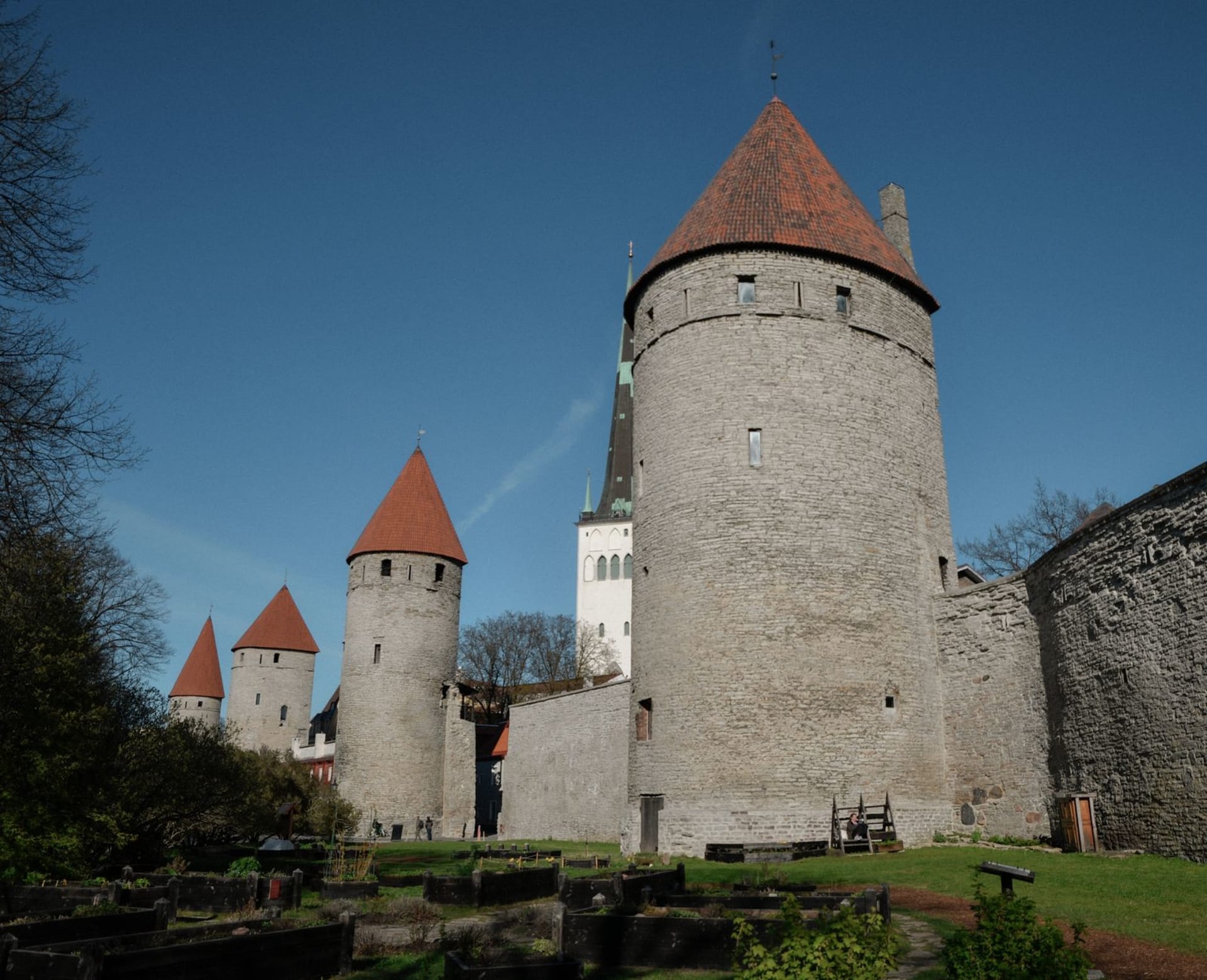
Tallinn
"The cobblestones here have been walked by merchants, conquerors, and now digital nomads — all equally dazzled."
The Weight of the Old Town
I arrived in Tallinn on a grey October morning and walked straight into the medieval town without consulting a map. That was the right instinct. The old town doesn’t need explaining — it explains itself through the slant of light between limestone towers and the particular silence of a cobblestone street at 7 a.m., before the tour groups arrive. The smell is candlewax and old stone and somewhere, faintly, the sea.
Toompea hill divides the city into upper and lower towns. The upper belongs to government ministries and pink-tinged Lutheran churches; the lower to guild houses, craft workshops, and a labyrinth of narrow lanes where the medieval fabric is nearly intact. Standing at the Kohtuotsa viewing platform I watched container ships move silently across the bay toward Helsinki. The medieval and the industrial, separated by nothing but air.
Tallinn’s Second City
What catches me off guard in Tallinn is always the city outside the walls. Kalamaja, the wooden-house district to the northwest, is where the city actually lives: brightly painted timber houses in mustard and sage, a creative quarter that grew up around the old Noblessner shipyard, and the best breakfast I found in Estonia — rye bread toasted thick, curd cheese, and a glass of kefir at a table shared with people who clearly worked in design.
The Telliskivi creative hub is the kind of place that exists in every European city now, but Tallinn’s version has something the others often lack: it feels earnest rather than performed. People here are actually making things — ceramics, software, furniture — not just drinking craft beer in the vicinity of people who make things.
What the Food Tells You
Estonian food is honest in a way I respect. Blood sausage and sauerkraut at the Christmas market in December. Pickled herring at the old market stalls. Mulgipuder — barley porridge with bacon — which is one of those dishes that sounds bleak and arrives as comfort. The black rye bread is remarkable: dense and slightly sour, served with butter and nothing else necessary.
I ate badly at the restaurants aimed at tourists in the old town and well almost everywhere else. That ratio holds.
The Digital Republic in a Medieval Shell
Estonia is the most digitally advanced country in the world by several measures — electronic voting, digital residency, a public sector that runs almost entirely online. This sits oddly and perfectly inside a city that looks like it was drawn by a romantic illustrator in 1890. You can apply for an e-residency in a medieval tower. The wifi in the church crypts is excellent.
I found this combination — extreme antiquity and extreme efficiency — to be Tallinn’s real character. It doesn’t see any contradiction between the two, and neither, after a few days, do you.
When to go: June and July for light and warmth; the sun barely sets and the city comes fully alive. December for the Christmas market, which is one of Europe’s best. Avoid the peak August crowds if you can. March and October offer low prices, empty streets, and light that is genuinely beautiful if you don’t mind cold.