Rakvere
"I came for a castle and left arguing with Lia about who'd survive a medieval siege longer."
A small northern Estonian town where a Livonian Order castle and a giant bronze aurochs make history feel oddly playful.
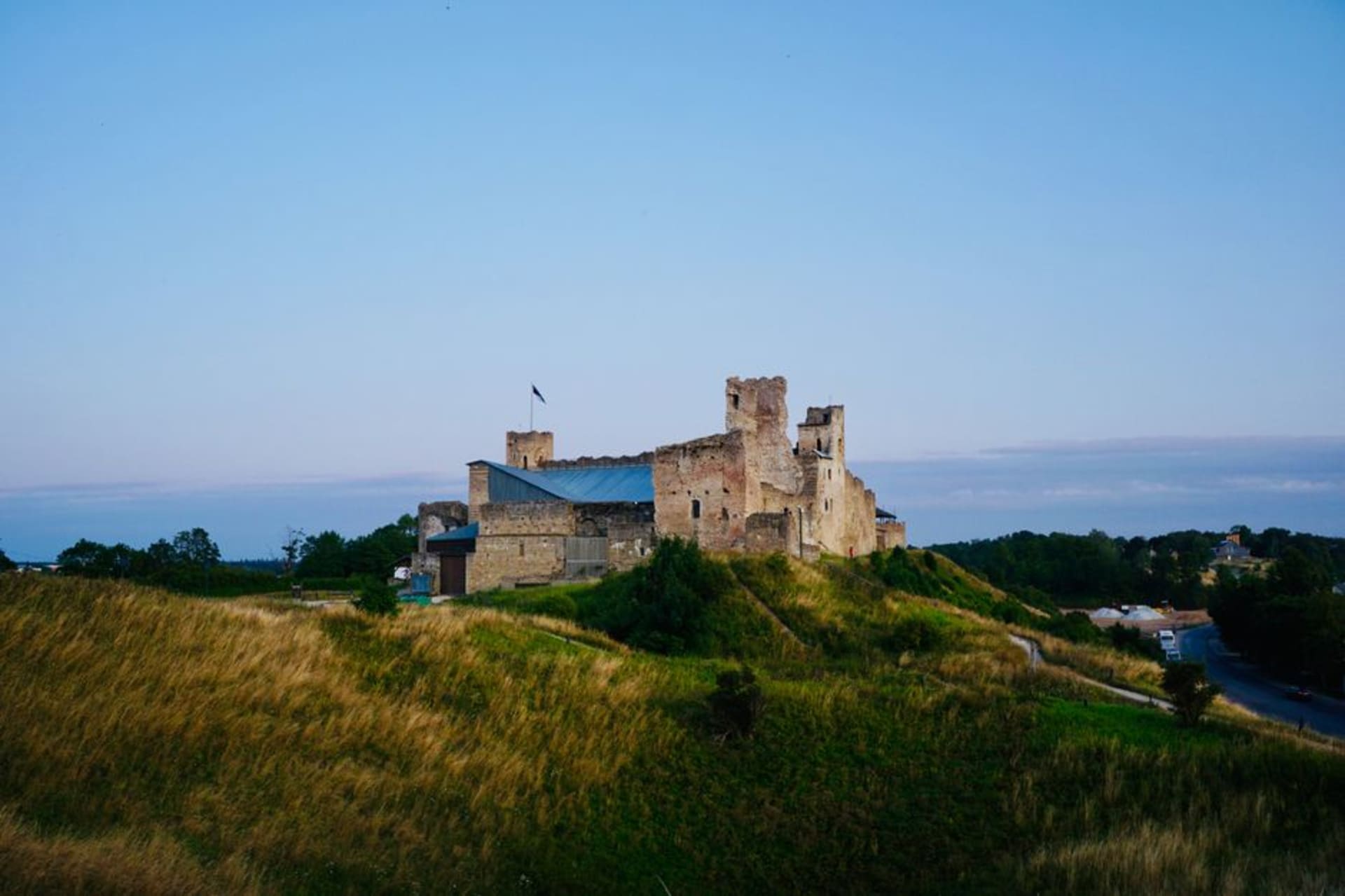
We almost skipped Rakvere. It was supposed to be a coffee stop between Tallinn and the coast, a name Lia had circled on the map because it sounded good out loud. Two hours later we were still there, climbing the wooden ramps of Rakvere Castle in the early evening light, and I was the one asking if we could stay another night. The castle sits on a hill that’s been fortified since at least 1226, when it first shows up in written records as a Livonian Order stronghold, and you can feel that layered history in the stone — Danish walls under Swedish additions under whatever the Livonians left behind. It’s rare to find a place that wears its conquerors so visibly, like rings in a tree trunk.
What sold me wasn’t the history lecture, though, it was the fact that the castle is a genuinely hands-on open-air museum. There were reconstructed siege weapons you could actually load and aim, blacksmiths hammering out nails the same way they would have eight centuries ago, and a guy in full chainmail who let Lia try on a helmet three sizes too big for her. We spent a ridiculous amount of time at the archery range built into the old grounds, and I lost every round, which Lia has not let me forget since.
Down in the main square, the town’s other claim to fame waits for you: Tarvas, a bronze aurochs statue unveiled in 2002 that’s somehow one of the largest animal sculptures in the Baltics. Nobody warns you how big it actually is until you’re standing under it. We ate soft-serve on a bench across from it and just watched local teenagers use it as a meeting point, the way you’d use a clock tower in a bigger city, which made the whole monument feel less like a tourist attraction and more like something that had quietly folded itself into daily life here.
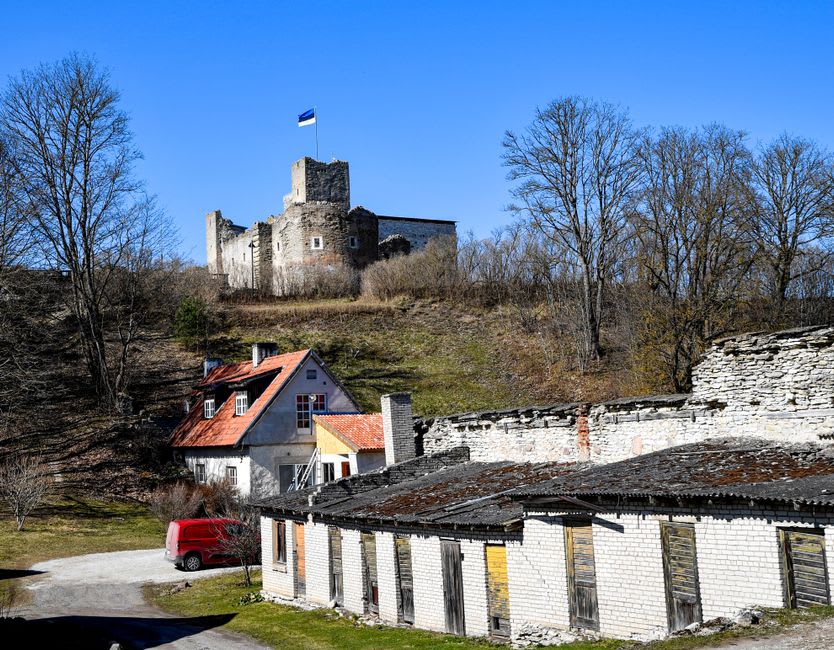
What stuck with me most, walking the streets afterward, was how dense the old architecture is for such a small town. German merchant houses next to Swedish-era facades next to buildings that clearly remember Russian rule — Rakvere passed through so many hands that it never settled into one single style, and somehow that patchwork is the charm of it. It’s not a grand city. It’s a town that got fought over for centuries and just kept building on top of itself.
When to go: Aim for summer, ideally June through August, when the castle’s open-air museum is running full tilt and the siege reenactments and craft demonstrations are actually happening — outside that window, the hill is still worth the climb, but half the magic is in watching it come alive.