Narva
"Two castles, fifty meters of river, and two centuries of European history trying to decide what it means."
The Border That Explains Everything
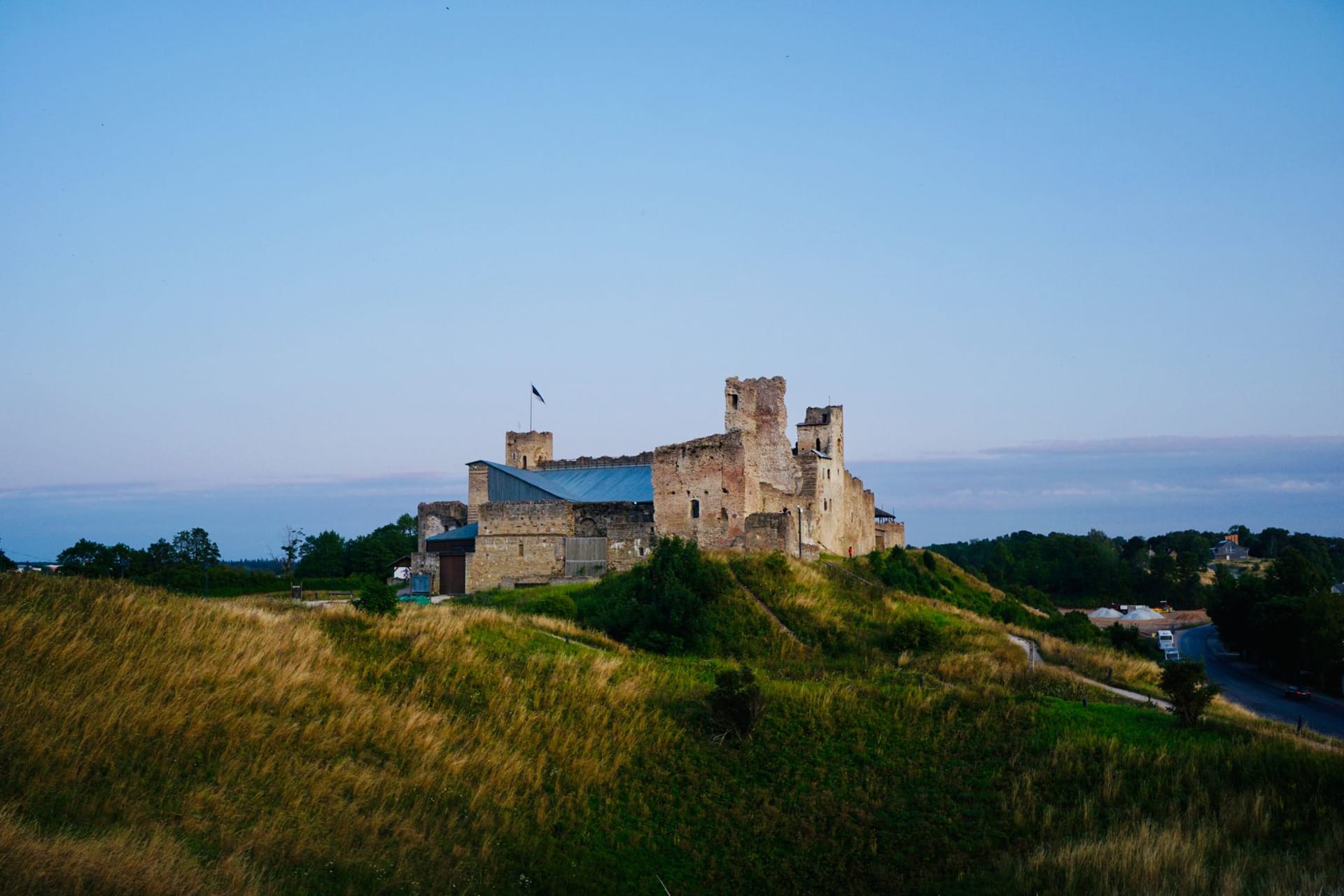
Narva sits at the eastern edge of Estonia — and therefore of the European Union — on a river where the medieval castle of the Teutonic Order faces the Russian fortress of Ivangorod across fifty meters of water. I stood on the ramparts of Narva castle and looked directly across at Ivangorod’s towers. The flags were different. The architecture was similar. The river between them was the precise width of a contested history.
Getting to Narva from Tallinn takes about three hours by bus — due east, through forests and flat farmland, the landscape becoming progressively less curated. Narva is not on the standard tourist itinerary, and the bus reflected this: Estonians visiting family, some cross-border traffic, and me.
The Russian-Speaking City
About ninety percent of Narva’s population is ethnically Russian, most of them descendants of Soviet-era workers who came when the textile factories were running. The result is a city that feels genuinely liminal — physically in Estonia, linguistically and culturally in something that doesn’t fit neatly into any current category. Signs are in Estonian and Russian. The church is Russian Orthodox. The café where I had breakfast played Russian pop music and the menu was entirely in Russian, which I cannot read.
This was not a problem. The coffee was excellent and the woman who brought it switched to English with the ease of someone who has had this conversation many times before.
Narva Castle
The castle itself is substantial — a late medieval Ordensburg, heavily restored after wartime damage but structurally convincing. The museum inside is unexpectedly good: it covers the city’s layered history from the Livonian Order through Swedish rule, Russian Imperial conquest, independent Estonia, Soviet occupation, and the present. The display on the Soviet textile industry is unexpectedly affecting — photographs of workers who built their lives here, whose children and grandchildren are still here, in a city whose identity remains complicated.
From the castle tower, the view of Ivangorod is unobstructed. The Russian fortress is larger, more elaborate, its towers reflected in the slow river. I watched a fishing boat move downstream. The fisherman waved at no one in particular.
The Baroque Town Hall and What Happened
Narva was, before World War II, one of the finest Baroque cities in Northern Europe. The town hall that remains is a reconstruction — the original was destroyed in 1944 when the city changed hands. The old town in the museum photograph shows what was lost: an entire urban fabric of seventeenth-century architecture, now replaced by Soviet-era apartment blocks. The reconstructed town hall stands alone in what was once a busy square, surrounded by space that used to be filled.
I found this concentration of absence genuinely moving. Narva holds the memory of what it was without pretending otherwise.
When to go: Late spring through early autumn for manageable weather; June and July are mild and long-lit. Narva can be covered in a day trip from Tallinn, though an overnight lets the city settle differently. Check current travel advisories regarding the border situation before planning your visit — the geopolitical context here is real and worth understanding.