
La Roque-Gageac
"The village has one main street and no room for a second. The cliff handles the rest."
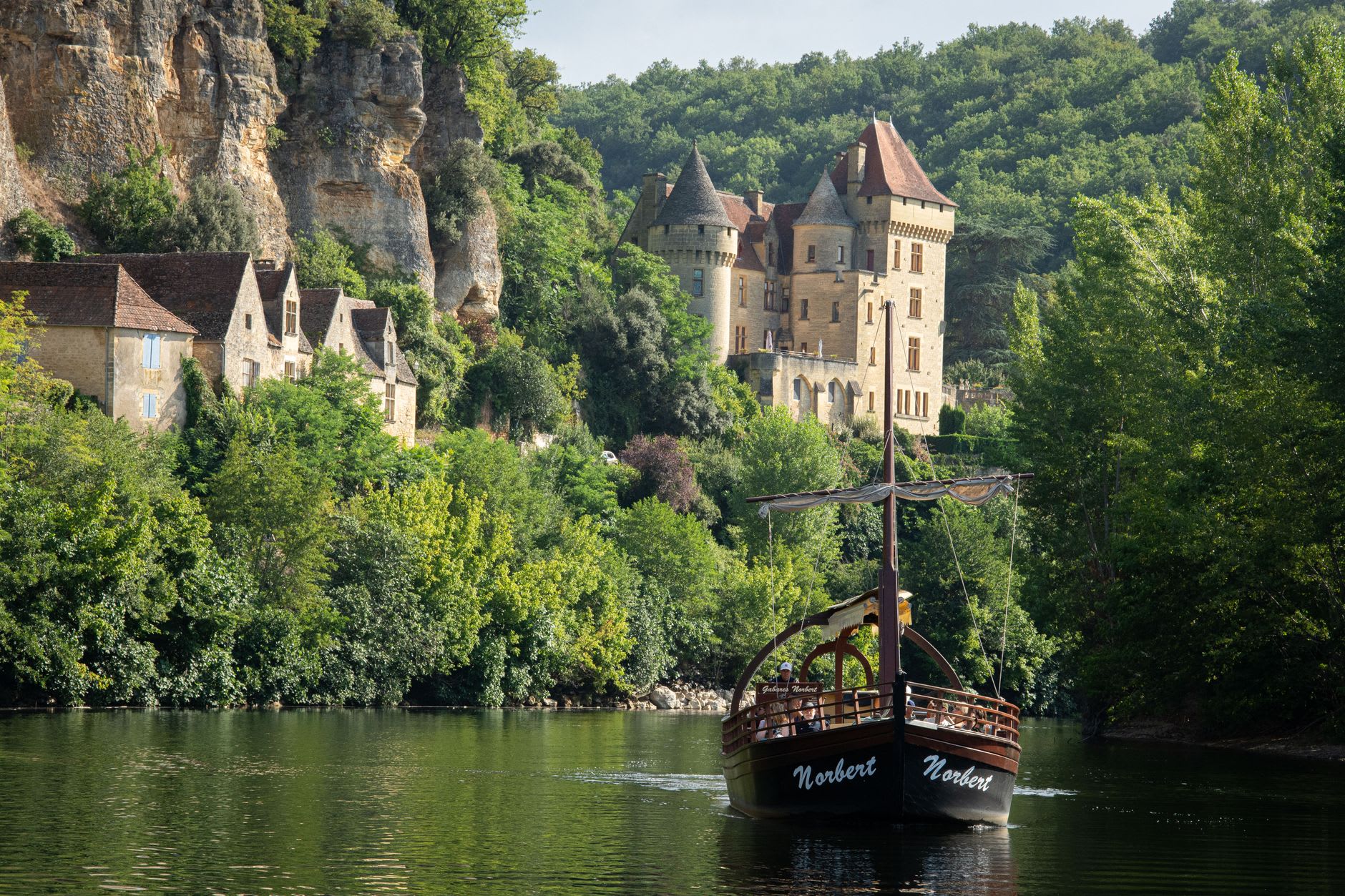
The best view of La Roque-Gageac is from the opposite bank of the Dordogne. I stopped on the road on the northern side, not because I planned to, but because the village stopped me. It sits in the narrow strip between a limestone cliff and the river in a way that looks architecturally impossible — not built against the cliff, but under it, the cliff forming a continuous wall behind the rooflines, the river forming a continuous floor in front. On a still morning the whole thing reflects in the water, doubled.
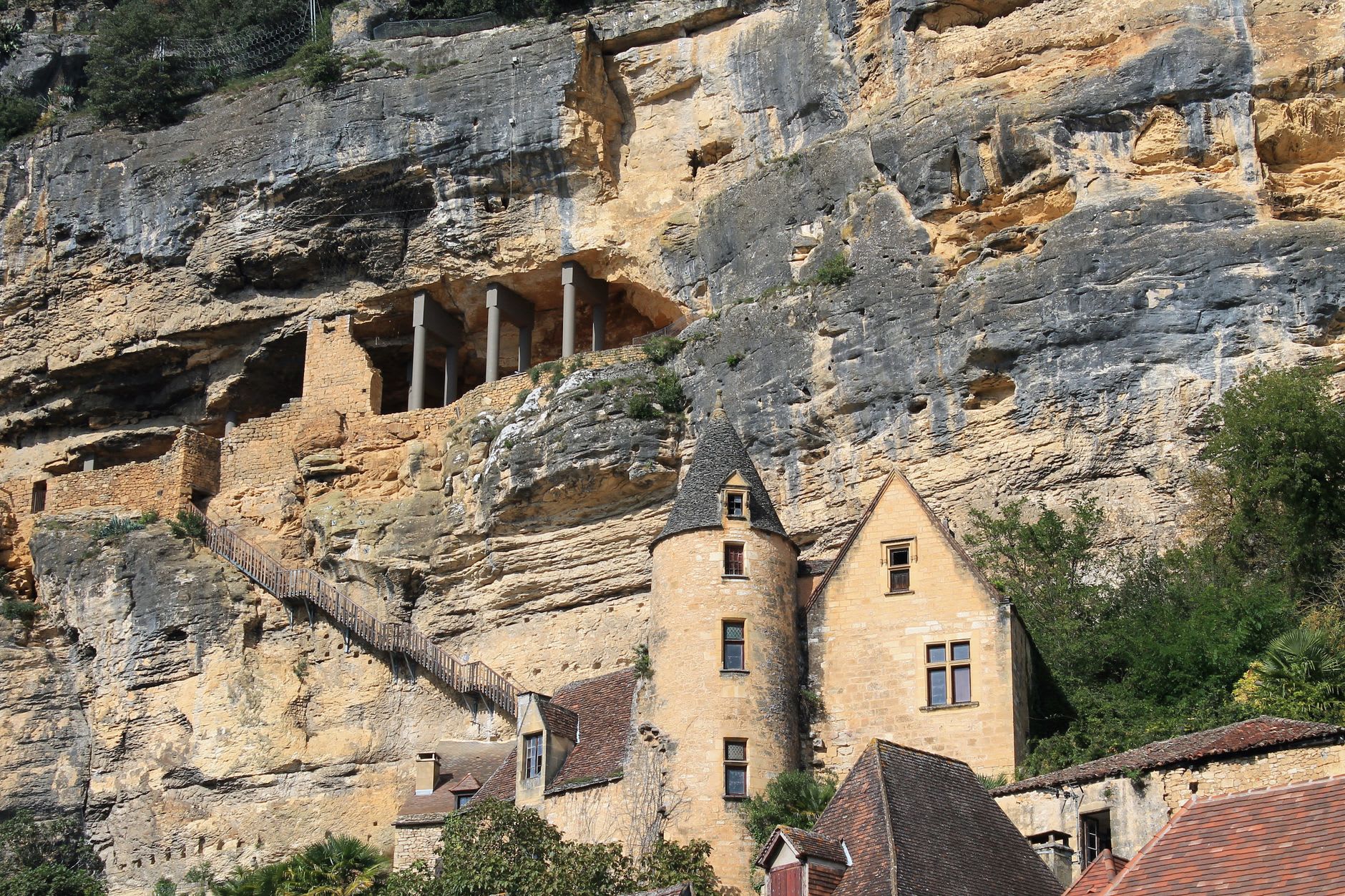
It is labeled one of the most beautiful villages in France, and the label is accurate enough to be almost useless. The information doesn’t prepare you for the specific geometry of the place — that narrowness, that sense of a village that has nowhere to expand except sideways, that has optimized every meter between rock and water for human habitation. There is one main street. It runs along the river. Behind it the cliff begins immediately, and the cliff is inhabited: troglodyte caves worked into the limestone, some dating to the medieval period, some used even earlier. Walk up the steep paths above the main street and you reach rock dwellings with centuries of smoke-stained ceilings, looking out through openings in the stone toward the river below.
The tropical garden tucked into a south-facing crevice in the cliff was the thing I didn’t expect. The limestone wall creates a microclimate warm enough to sustain bamboo, mimosas, and agave — plants that have no business thriving in Périgord — and the garden climbs the cliff face in an improbable vertical arrangement. The gardener who showed me around had the proprietary pride of someone tending something genuinely unlikely.
Taking a gabare from La Roque-Gageac downstream toward Beynac is the way to understand the valley spatially. The river is wide and slow here, and from the water the relationship between cliffs and châteaux becomes legible in a way it never quite does from the road. Beynac appears around a bend and rises against the sky. The Château de Marqueyssac reveals its terraced gardens on the opposite bank. The current is barely perceptible. The gabares use poles more than paddles and move with the self-assurance of something that has been doing this for eight hundred years.
When to go: April through June for the exotic garden in bloom and the river at its most photogenic. October for autumn light on the limestone and fewer visitors on the one main street. The gabare season runs roughly April through November.