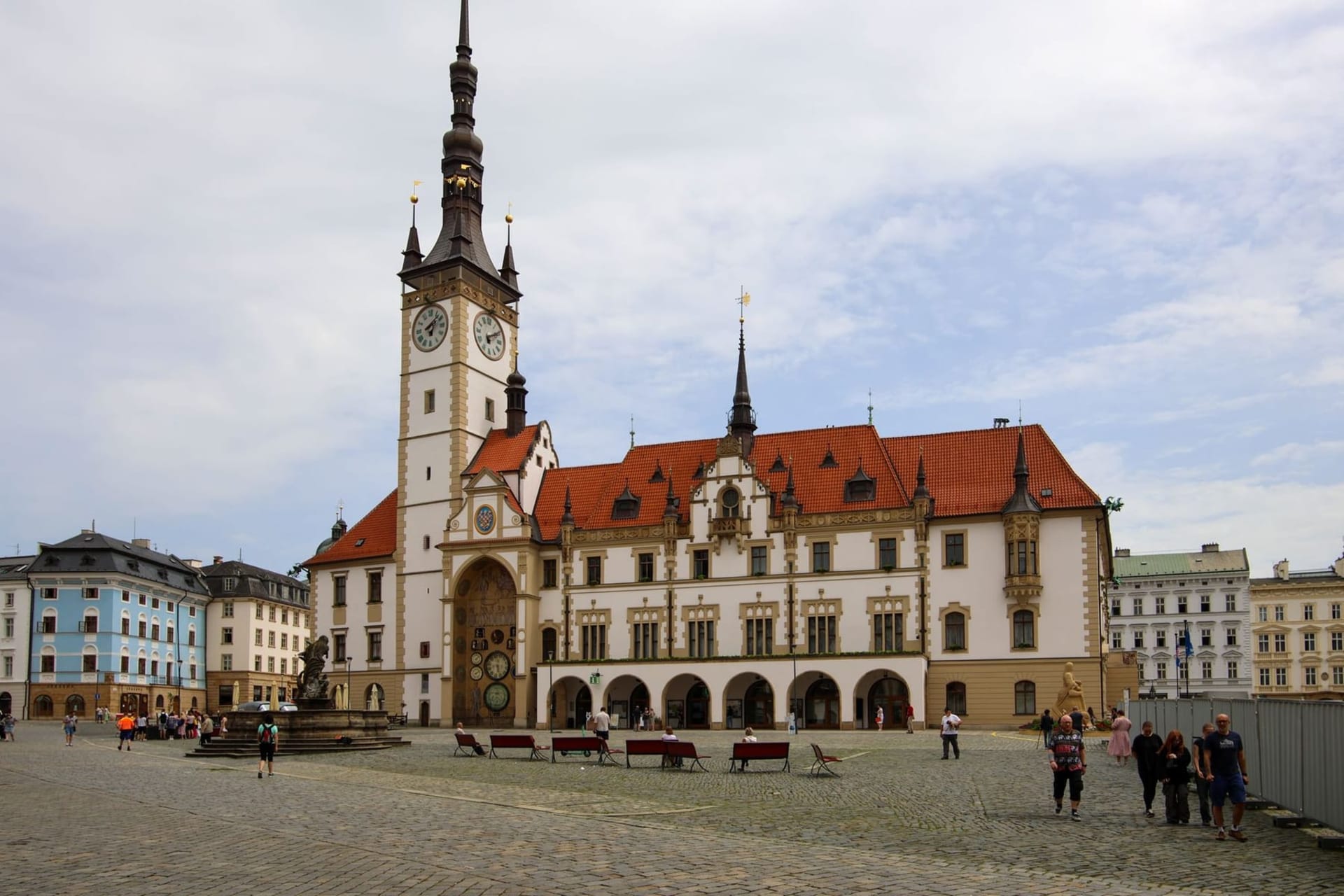
Olomouc
"Olomouc has everything Prague has except the crowds — and that includes the culture."
Moravia's secret gem: a Baroque university city of six Baroque fountains, a UNESCO Trinity Column, and a cheese so pungent it defined a region.
I arrived in Olomouc on a Tuesday, which felt exactly right. Not a weekend, not a holiday — a Tuesday, when the city belongs entirely to itself and its students, and the trams rattle through Horní náměstí without a selfie stick in sight.
Six Fountains and a Column
The first thing that strikes you about the main square is not the scale of it, though it is genuinely vast, but the fountains. Six of them, each depicting a Roman deity, each dripping with green-gold algae that gives them the look of things that have been standing here for centuries — because they have. I circled all six before I sat down, the way you might count your blessings before accepting them as real. The Neptune fountain caught the late light in a way that made the water look copper-colored. I stood there longer than I should have.
The Holy Trinity Column rises above all of it: 35 meters of Baroque aspiration, a UNESCO World Heritage site since 2000, and one of the finest examples of Central European Baroque sculpture anywhere. Up close, the detail is absurd — dozens of relief figures packed into pale limestone, saints and angels in positions that suggest tremendous effort and divine urgency all at once. Lia tilted her head back so far trying to take it all in that she nearly lost her sunglasses.
The Smell That Named a Region
Then there is the cheese. Olomoucké tvarůžky — soft, sour, fermented, and aggressively present. You smell it before you see it. The covered market off Dolní náměstí sells it in small wheels, and the vendor pressed a sample into my hand with the confidence of someone who has watched many foreigners hesitate and then convert. I hesitated. Then I converted. It tastes like something between blue cheese and ambition — sharp enough to make you blink, complex enough to make you go back.
It pairs, improbably and perfectly, with Moravian wine. The region grows Welschriesling and Müller-Thurgau in the hills to the south, and the wine bars along Denisova ulice pour it by the glass at prices that still feel like a small apology.
What Prague Keeps Quiet
The surprise came on the second evening: a student chamber ensemble playing Janáček — who was born barely 80 kilometers from here — in a Baroque church on Václavské náměstí, to an audience of maybe forty people. No ticket required. The acoustics were extraordinary. I sat in a pew and thought about how much beauty circulates quietly through cities that are not famous for it.
When to go: Late spring (May–June) for long evenings and open terraces without summer crowds. September is equally good — the university fills back up and the city hums with the low-grade electricity of a place that takes its intellectual life seriously.