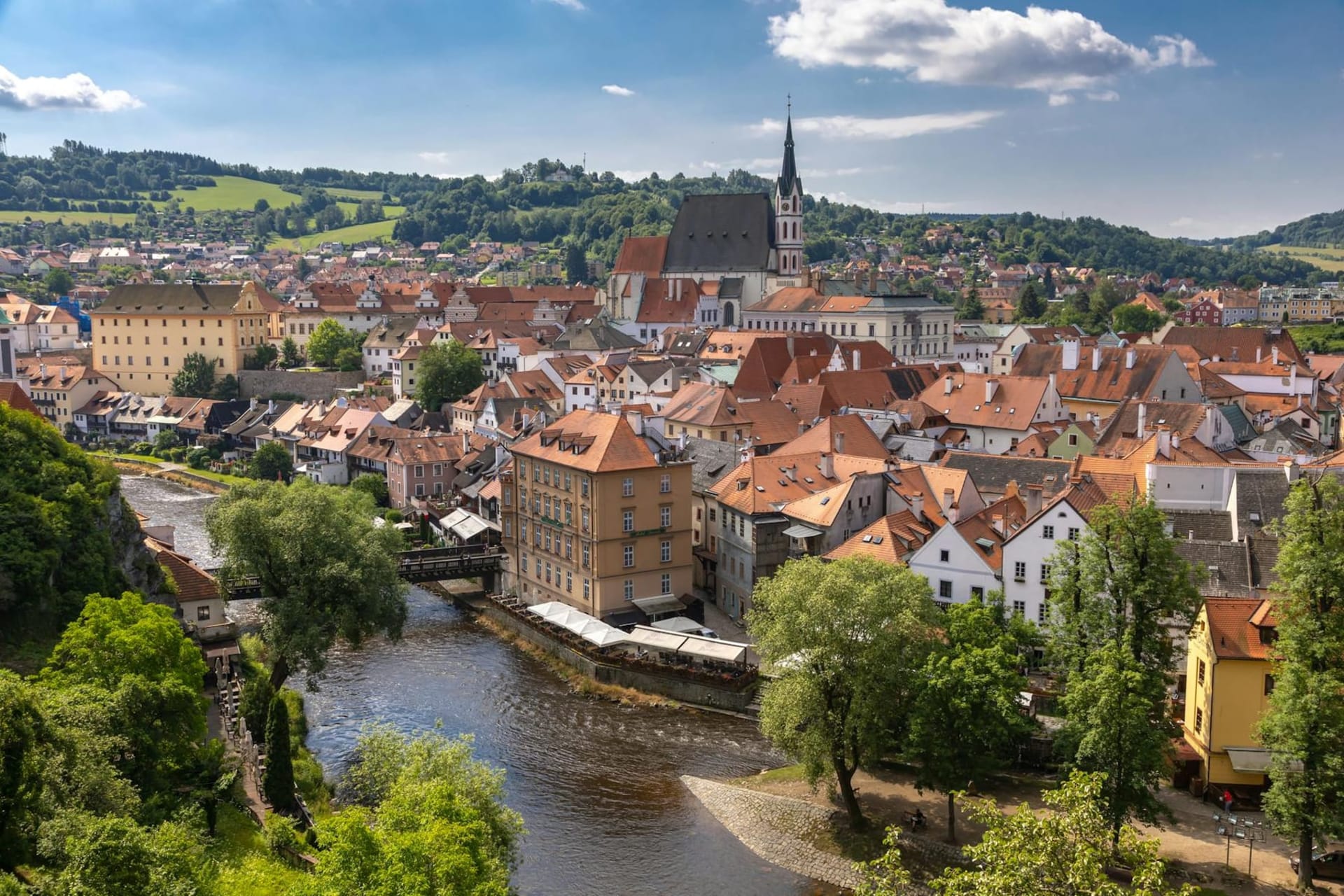
Ceske Budejovice
"Ceské Budejovice makes the beer the world's most misappropriated brand, and does so with dignity."
The home of original Budweiser beer — Budvar — sits on the largest square in Bohemia, ringed by Baroque arcades and unassertive grandeur.
I had not expected to feel anything particular about a beer dispute. Intellectual property law has never stirred me. But standing in Náměstí Přemysla Otakara II — the great square, the largest in Bohemia — with a glass of Budvar sweating in my hand, I felt something close to satisfaction on behalf of a city I’d arrived in only that morning.
The Square and What It Holds
The square is enormous, a full two hectares of pale cobblestone surrounded on all sides by Baroque arcades that shelter cafés and pharmacies and a few unremarkable shops. The scale should feel overwhelming, but it doesn’t — the proportions are right, the facades low enough that the sky fills whatever the buildings leave. At the center, the Samson Fountain spits water from the mouth of a lion, and around it old men read newspapers at café tables that have already been in the sun for two hours by the time most tourists arrive. The Black Tower rises at the northeast corner, fourteenth century, offering views over rooftops to the confluence of the Vltava and Malše rivers. I climbed it. Lia waited below with the beers.
The Brewery and the Lawsuit
The Budějovický Budvar brewery sits a short walk north of the square on Karolíny Světlé, and its tour is one of the more quietly enjoyable in central Europe. There is no theater here, no showmanship — just long cool rooms, the smell of hops and yeast and something slightly mineral, and a guide who delivers the history of the trademark dispute with the Anheuser-Busch company in the dry tone of someone recounting a chess match they have been winning for over a century. The Americans used the Budweiser name first in the United States, so the Czech brewery cannot sell under that label there. Everywhere else — most of the world — they can and do. The beer itself is lagered for ninety days, longer than nearly any other commercial lager on earth, and the difference is not subtle. I drank it standing at the brewery bar and thought about how strange it is that the better product is also the lesser-known one.
What Surprised Me
I had assumed Ceske Budejovice would feel like a footnote town — a place people pass through on the way to Ceský Krumlov, which sits sixteen kilometers to the south and gets the postcards. Instead, I found a city that functions on its own terms. The covered market on Biskupská street, where women sell bunches of parsley and local cheese at folding tables, smells like every French market I grew up near. There is a Dominican monastery from the thirteenth century tucked between two apartment buildings, and it has the unhurried air of a place that is not performing for visitors. In a café on Hroznová, I ate svíčková — beef sirloin in cream sauce with bread dumplings — and the dumplings were so light they barely held their shape on the fork. I did not expect to care about the dumplings. I cared about the dumplings.
When to go: Late spring and early September offer the best light and manageable crowds. The Budvar brewery runs tours year-round, but the town itself breathes more easily once the Ceský Krumlov summer overflow subsides.