Europe
Crete
"Crete doesn't feel like an island. It feels like a country that got surrounded by water."
I arrived in Heraklion on a night ferry from Piraeus, which is the correct way to arrive — stumbling off the boat at dawn with the port still half-asleep, the smell of diesel and salt, a kafeneio already open on the waterfront serving coffee the color of mud and twice as strong. The city isn’t beautiful in any obvious way, but by the time I’d found breakfast and figured out the bus to Knossos, I’d already understood something: Crete is not trying to charm you the way the other islands do. It is too old for that, too serious, too preoccupied with its own story.
Knossos is disorienting in the best sense. Sir Arthur Evans reconstructed it with a heavy hand — the painted columns, the restored frescoes — and purists never forgive him, but standing in what was once the throne room of a Bronze Age palace, trying to hold the concept of 3,700 years in your head, the reconstructions help. The real revelation comes not from the famous sites but from the lesser ones: Phaistos, set on a ridge with views across the Messara plain, with almost no tourists and a sense of genuine antiquity that Knossos, for all its grandeur, sometimes loses under the tour groups. From Phaistos I drove west into the Amari Valley, stopping in villages where the war memorial outside every church listed names I could barely count, a reminder that Crete’s history with resistance is not abstract.
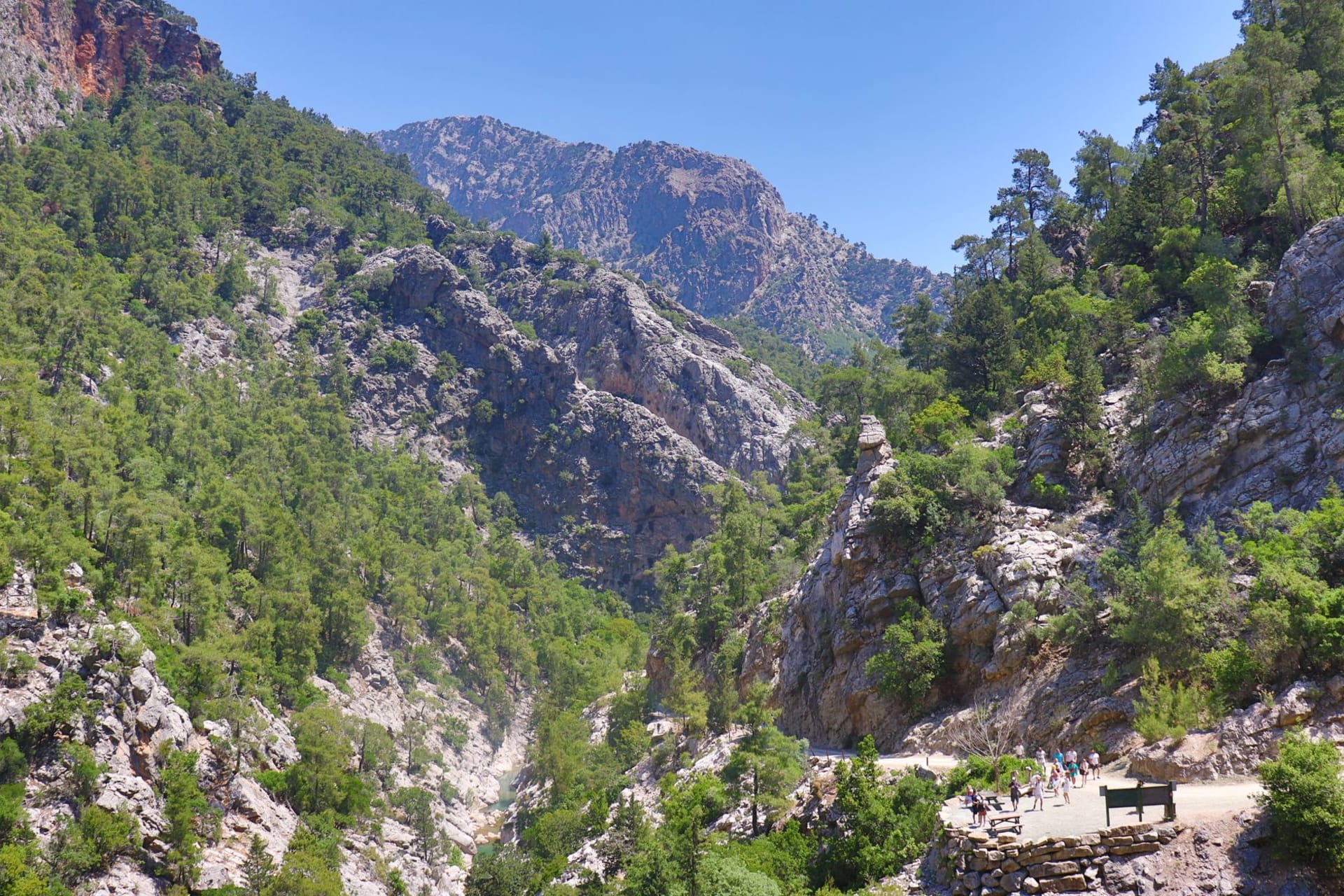
The Samaria Gorge is a cliché that earns its reputation. Sixteen kilometers through a limestone canyon that narrows, at the Iron Gates, to barely three meters wide, walls rising 300 meters above you. I did it in May, leaving Xyloskalo at first light to avoid the crowds, reaching Agia Roumeli by early afternoon to collapse on the beach and eat grilled octopus at a table two meters from the Libyan Sea. The south coast in general — Loutro, accessible only by boat or foot, Sfakia and its fierce local identity, the long empty beaches west of Paleochora — is where Crete keeps its wildest self.
When to go: Late April through early June is ideal — wildflowers, manageable temperatures, gorges open, beaches uncrowded. September and October bring warm sea, harvests, and a golden light on the limestone that photographs better than any postcard. Avoid July and August unless your plan is to fight for a sun lounger.
What most guides get wrong: They treat Crete as a beach holiday with ruins as a side trip. The interior — the White Mountains, the Amari Valley, the plateau of Lassithi at 840 meters — is where the island’s actual character lives. Rent a car, drive up into the hills on a road that keeps getting narrower, and find the village where a woman is still making cheese the way her grandmother did. That is the Crete worth coming for.