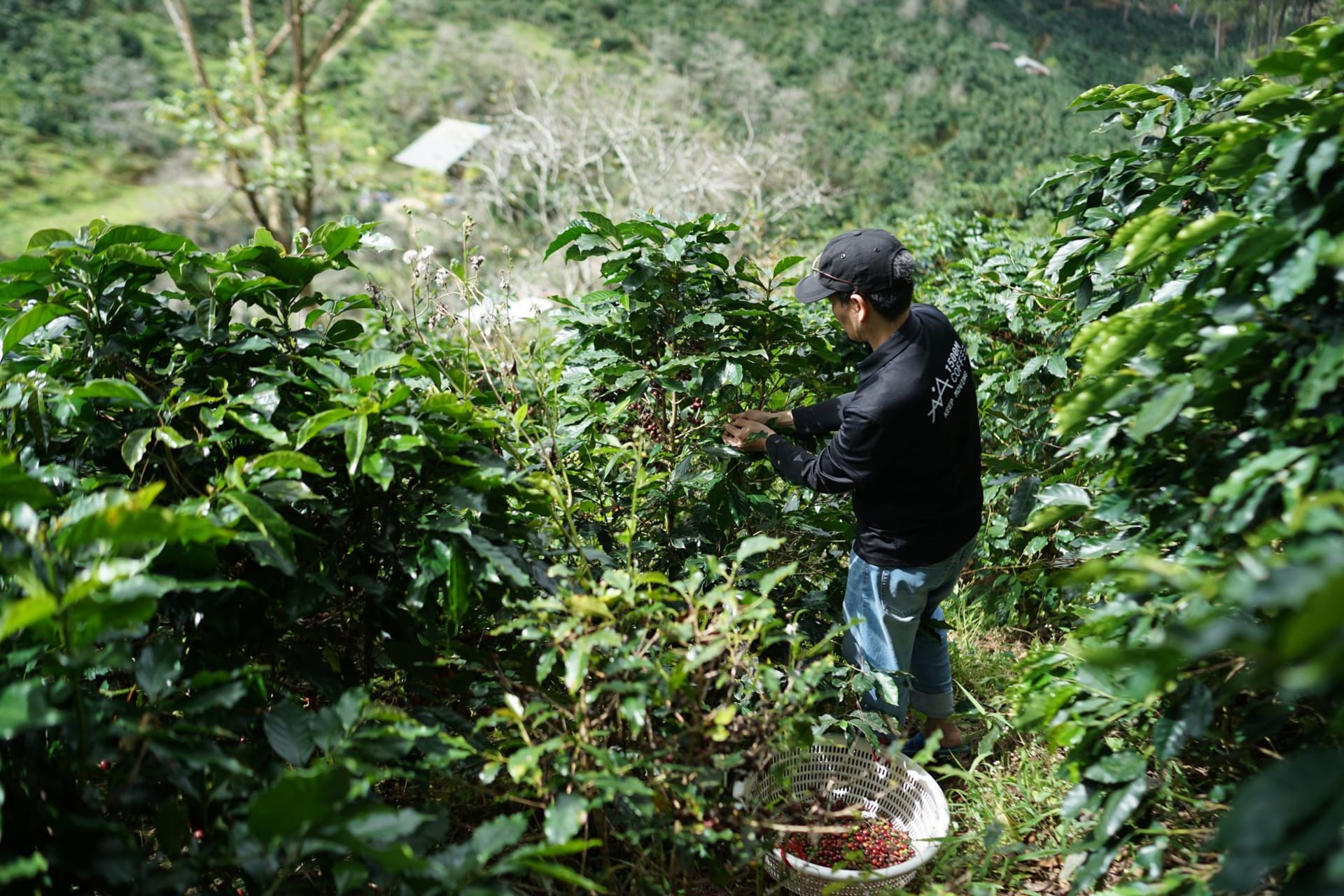
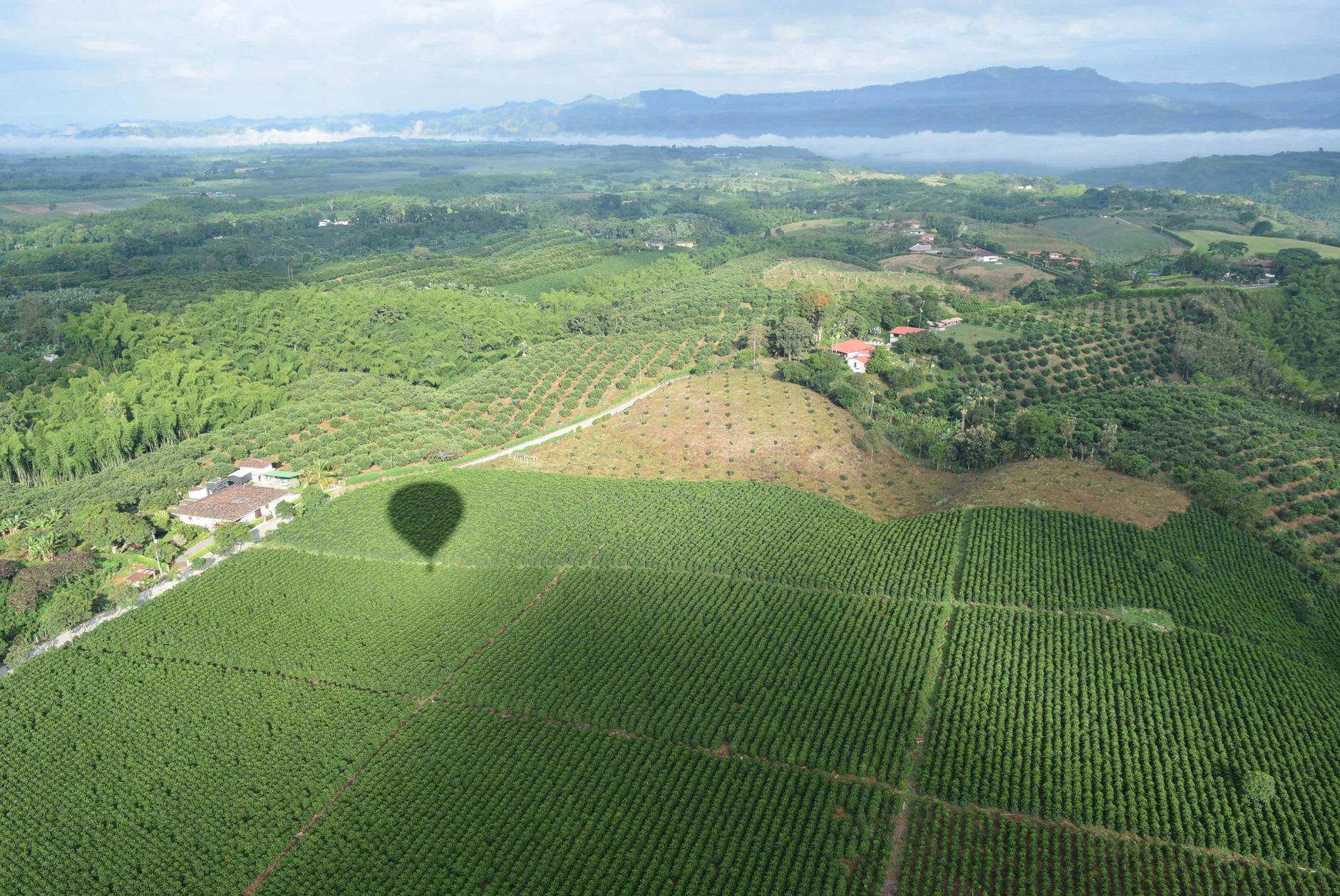
I came to Filandia on a Tuesday in January, which is to say I came at the best possible time. The town sits about fifteen minutes north of the main Armenia-Salento road on a ridge that puts it several hundred metres above the valley floor, and that altitude changes everything — the air is cooler, the mornings are slower, and the light hits the valley below in a way that makes you understand, properly, what the phrase “coffee region” means as a landscape. You can see everything from here. Farms stacked on farms, the geometry of crops on hillsides, the glint of the Quindío River somewhere below the haze.
The mirador at the top of the town is the obvious draw, and it earns its reputation without the performance of crowds. A wooden observation platform, a few families from Pereira on a day out, a woman selling obleas with arequipe from a cart. I bought two obleas and ate them looking west as the sun came fully over the eastern ridge and the valley below went from grey to gold in about four minutes. That particular four minutes justified the detour entirely.
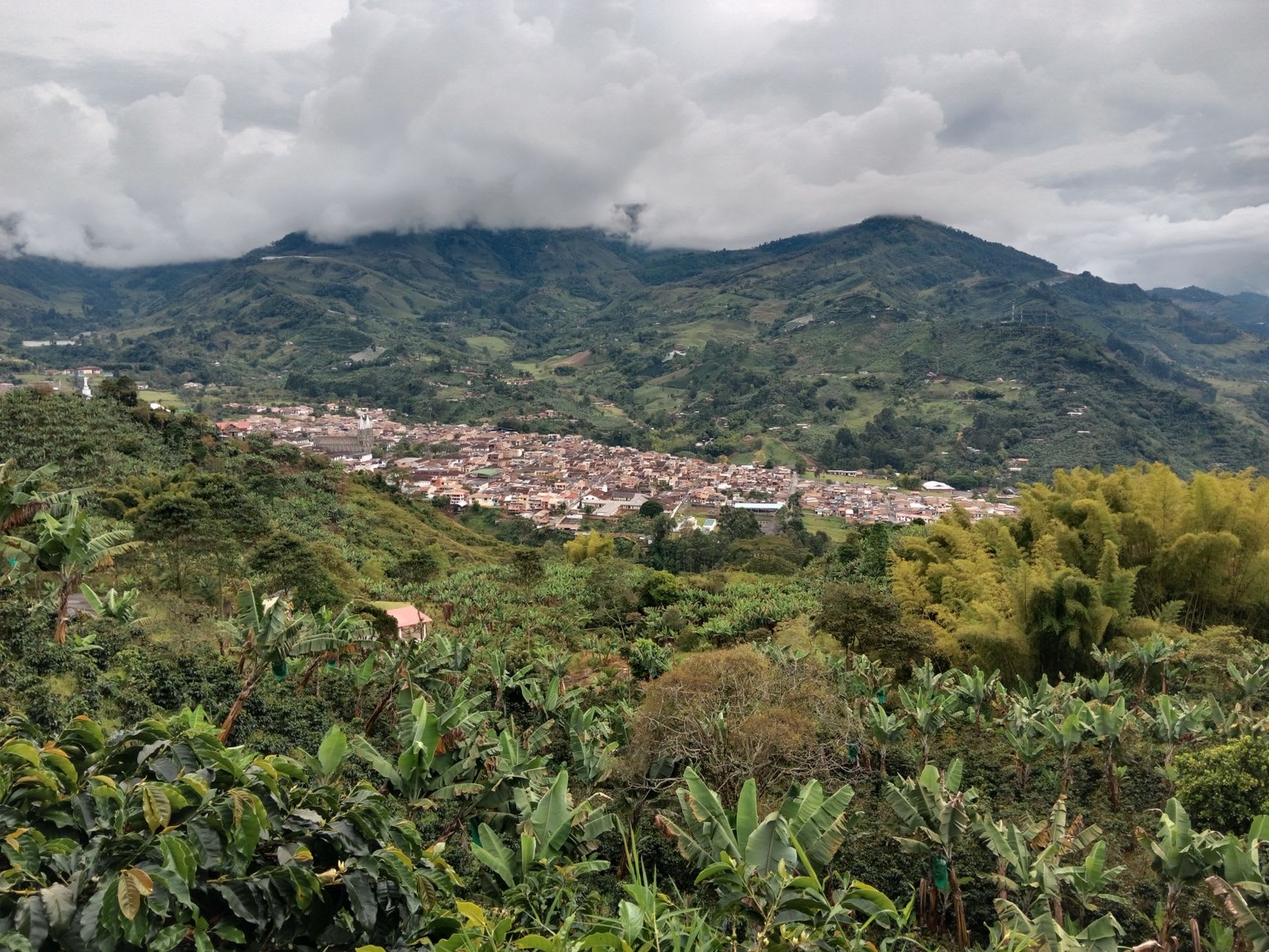
The town itself is more intact than Salento in certain ways — less tourist infrastructure means fewer souvenir shops and more actual commerce. The main square has a church with a yellow-and-white facade that photographs like a postcard and functions like a church: mass on Sunday morning, old men on the benches by the fountain in the afternoon, teenagers on phones ignoring both. The side streets have the faded wood balcony aesthetic of traditional Antioquian architecture — what Colombians call the arquitectura republicana — in every state from immaculate to gently collapsing.
The artisan scene in Filandia is quieter than it sounds in guidebooks but genuine: weavers working in natural fibres, a few pottery studios, a place that makes candles from beeswax in moulds shaped like the local orchids. I bought a small basket from a woman who had woven it herself and was visibly uninterested in selling it to me, which is the correct attitude for a craftsperson to have and which made me trust the object more.
Coffee, predictably, is excellent here. A small café on the corner near the mirador stairs serves single-origin cups from a finca about three kilometres up the road. The owner explains the altitude and the variety and the processing method with the patience of someone who has done this many times but has not yet gotten tired of it. The cup costs less than a dollar fifty. It tastes like flowers and dark chocolate and the particular morning I drank it in.
When to go: Filandia rewards any dry-season visit, but the mornings in December and January are exceptional — cold enough for a light jacket, clear enough to see the whole Quindío plain from the mirador. Arrive early on a weekday for the views before the day-trip crowds from Armenia; stay overnight and you have the evenings entirely to yourself.