Talca
"Talca moves at the speed of a city that knows exactly how far it is from the next emergency."
Talca came to my attention the way many things in the Central Valley do: through food. A woman in a Santiago hostel mentioned the empanadas, specifically that Talca baked its empanadas in clay ovens using a recipe involving boiled egg and olive and a specific ratio of onion to beef that was protected with the seriousness of a family inheritance. I wrote it down, and three days later I was on a bus south from Rancagua watching the valley widen and the mountains step back and the landscape take on the particular character of the Maule — flatter, drier at the edges, more agricultural in an austere, working way.
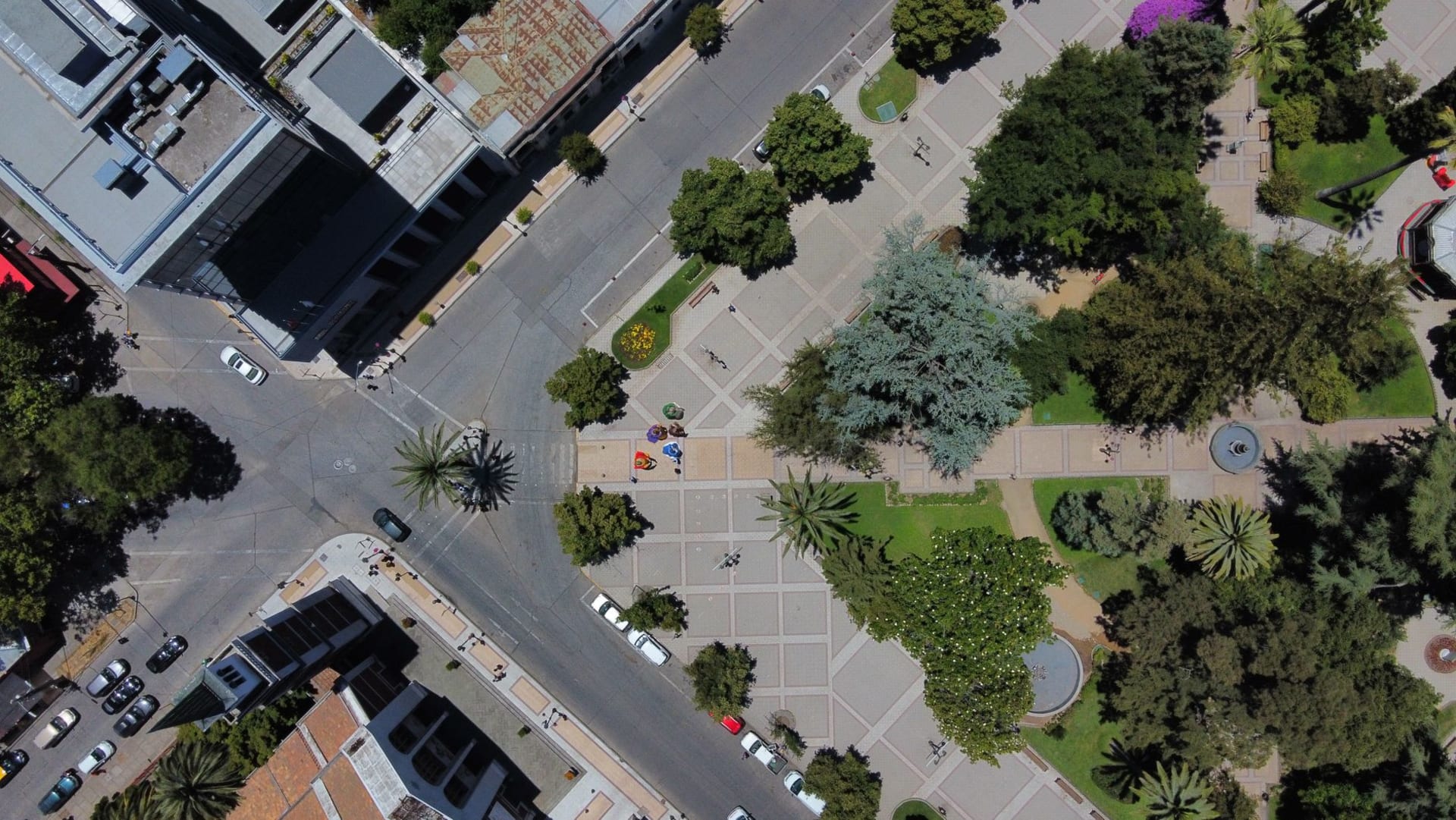
The city itself is medium-sized by Chilean standards, 220,000 people and two universities and a history that goes back to 1742. It was largely destroyed by the 2010 earthquake and rebuilt without the patience to restore what was lost, so the center holds a mix of colonial remnants and concrete replacements that don’t quite apologize to each other. But the barrio histórico that survived — a few streets of single-story adobe buildings with their characteristic clay-tiled roofs — carries the particular quiet of places that have decided not to announce themselves. I walked those streets in the late afternoon when the light fell nearly horizontal and turned the adobe walls the color of good bread, and two cats watched me from a gate post with professional indifference.

The Museo O’Higginiano is housed in the building where Bernardo O’Higgins signed the Chilean Act of Independence in 1818, and it maintains that fact with the careful dignity of an institution that knows it is tending a national relic. The rooms are arranged around a colonial courtyard with a fig tree in the center that looks old enough to have been there for the signing. I spent an hour in the independence room looking at period documents and then another twenty minutes sitting under the fig tree eating the empanada I’d bought from the woman three streets over who had been running her clay oven since six that morning. The egg and olive and the onion-to-beef ratio were all exactly as promised.
The wine country around Talca belongs to the Maule Valley, and specifically to the old-vine tradition of País and Cinsault that preceded Chile’s export-wine ambitions by several centuries. These are not the wines that appear in international magazines. They come in unlabeled bottles from small producers in the mountain foothills and sell for the cost of a transit fare. At a viñatería near the Mercado Central, I asked what they had in Cinsault and the owner disappeared behind a curtain and came back with a bottle he held with two hands, like an offering. It was fourteen months old and tasted of crushed berries and something slightly ferrous, mineral, the soil asserting itself through the fruit. I drank half of it with a plate of bread and cheese and gave the rest back to be refilled by someone else.

Talca’s market, running along several blocks near the bus terminal, operates at a pace set by the people who supply it rather than the people who visit it. The vegetable section smells of damp earth in the morning. The fish stalls arrive at nine and sell out by noon. A woman in a blue apron was selling merkén — the smoked chili spice blend of Mapuche origin — from a glass jar, spooning it into paper bags weighed on a scale that looked as old as she did, and the smell of it hit from three stalls away.
When to go: September through November for the best Maule wine-country driving, with new growth on the old vines and cool temperatures. March to April for harvest energy. Talca works well as a multi-night base for exploring the Maule Valley’s surrounding wine country, particularly the coastal Cauquenes sub-valley and the mountain Pencahue area.