Bambari
"Bambari sits at the middle of everything and the edge of everywhere — which is a different thing from being at the center."
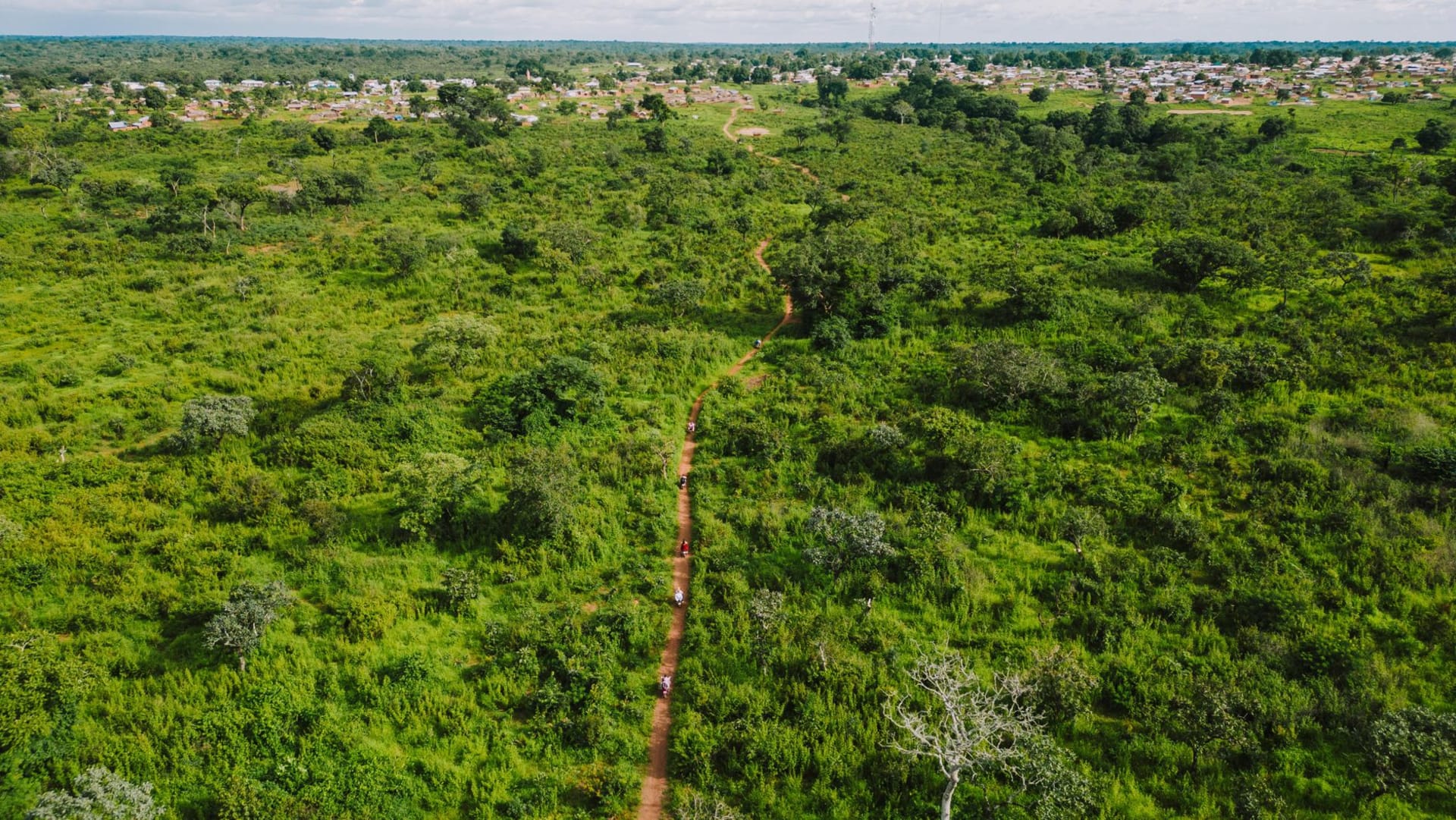
The road from Bangui to Bambari runs east through a landscape that holds the particular quality of central African interior: savanna punctuated by gallery forests along the river valleys, villages set back from the road under mango trees that have been growing since before anyone living there was born, the occasional cluster of thatched structures that appears without preamble and disappears in the rearview in the same unhurried way. Bambari itself sits on the Ouaka River, and arriving from the west you come over a low ridge and see the town spread out below along the water — not dramatically, not in a way that announces itself, but with the quiet presence of a place that has been here a long time and expects to be here longer.
The Ouaka moves slowly this far from its source, a brown and gentle current running between banks of pale sand where fishermen tend their nets in the early mornings. I walked down to the river on the first day before the heat peaked, when the light was still at an angle and the sand was cool underfoot. Two men were mending a net stretched between bamboo poles driven into the bank, working with an economy of movement that suggested they had done this particular repair, in this particular spot, many times before. They acknowledged me without interrupting what they were doing, which felt like the right response to a stranger appearing at seven in the morning with no obvious purpose.

Bambari is one of the few towns in the Central African Republic where the formal market runs with what passes for consistency — a central covered structure that holds butchers, fabric sellers, grain merchants, and at one end a row of women who sell cooked food from small pots. The food here reflects the town’s position at the intersection of the country’s interior: cassava preparations from the south, dried river fish from the Ouaka system, sorghum porridges that come from the drier regions to the north. I ate a fish stew with cassava leaves that was more deeply flavored than anything I had managed in Bangui — the fish had been dried long enough to concentrate, and the leaves had been cooked long enough to surrender their bitterness into something green and soft and right.
The town has a layered religious geography that is visible in its architecture and audible in its mornings. The Catholic cathedral on the hill rings its bells at six. The mosques that serve the town’s substantial Muslim community — traders from Chad and the Sahel who have been moving through this part of CAR for generations — call the fajr prayer in the dark before the cathedral’s bells. There is a Protestant church that fills every Sunday with a choir that can be heard two streets away. These sounds layer rather than compete, and they give Bambari its particular morning texture — a place where different histories of arrival have settled into something that functions, mostly, as coexistence.

In the evenings, the river reclaimed the town’s attention. People moved toward the water after the heat broke, sitting on the banks in groups, children wading in the shallows while parents watched from the sand. A man sold grilled catfish from a smoking charcoal grill set up on the bank, and the smell of it moved through the early evening air in a way that required no advertising. I sat on the bank until dark, eating fish with my hands, watching the last of the light leave the Ouaka’s surface, and feeling the specific satisfaction of a place that had asked nothing of me and given everything it had.
When to go: December through February for the dry season, when the Ouaka is at its most navigable and the roads connecting Bambari to both Bangui and the eastern regions are firmer. The town functions year-round, but the wet season (June through September) can make the approach roads slow and the river crossing unpredictable.