Trongsa
"You understand Bhutanese history the moment you see Trongsa Dzong from across the gorge — it was never a religious site that became a fortress, but a fortress that became everything."
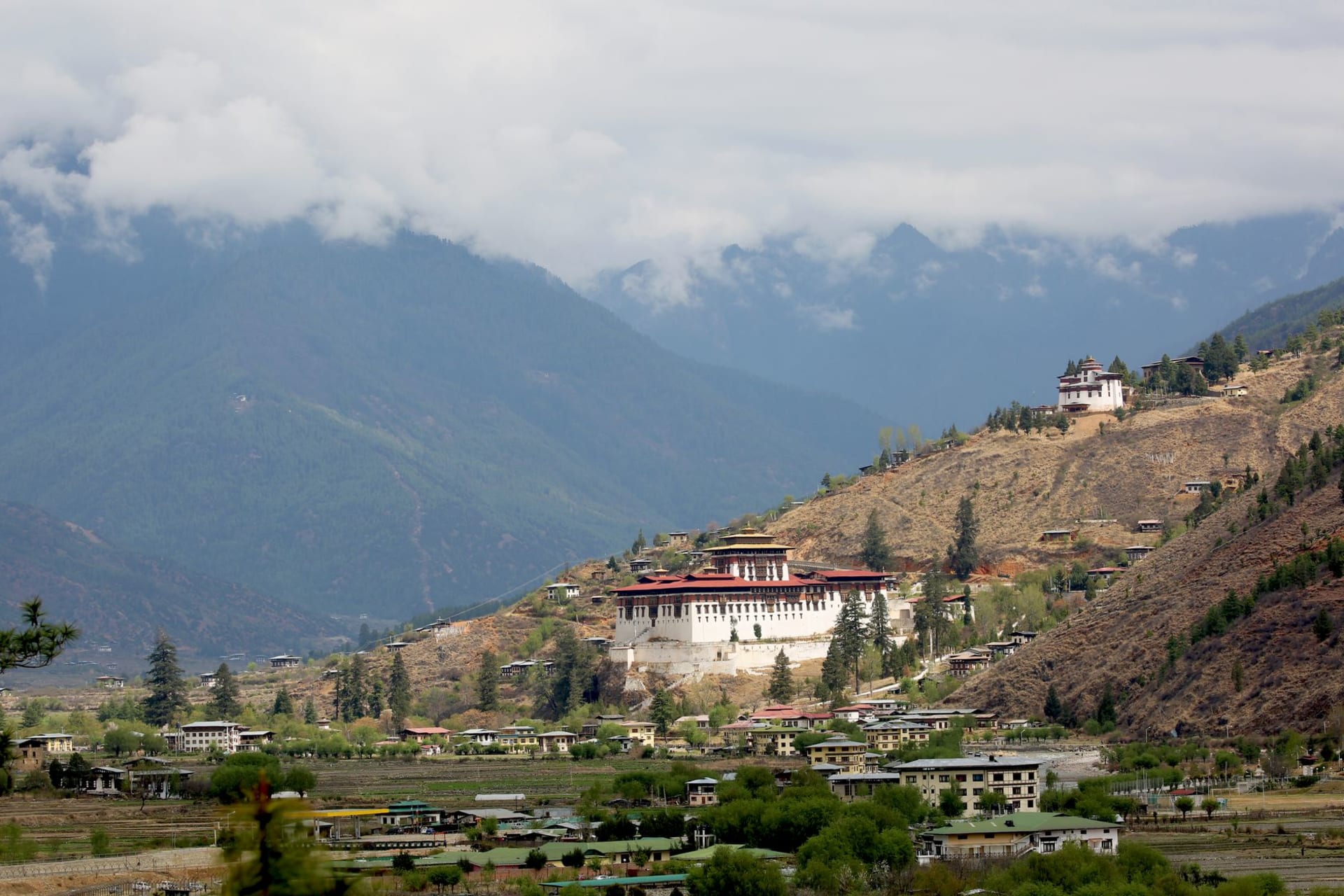
The first sight of Trongsa Dzong stopped me mid-sentence. I had been talking to my driver about nothing in particular when we came around a bend in the road and the gorge opened below us and there, on the far side, clinging to a promontory of rock that dropped sheer into the Mangde Chhu river, was the dzong. It is enormous. It is the largest dzong in Bhutan, built on a spur of land above a gorge so deep the river at the bottom sounds like weather rather than water. Before the road was built in the 1960s, the only way across this gorge was through the dzong itself — which meant that whoever controlled Trongsa controlled the movement of every person, every tax caravan, every army between eastern and western Bhutan.
That geography made Trongsa the hinge on which Bhutanese political history turned. The Wangchuck dynasty — the royal family that still governs Bhutan today — came from here. The first king, Ugyen Wangchuck, served as Penlop (governor) of Trongsa before unifying the country in 1907. The tradition continues: the Crown Prince of Bhutan is still formally invested as Penlop of Trongsa before ascending the throne. The dzong is not merely a historical site — it is the origin of the state.

I crossed into the dzong through its front gate and climbed through a succession of courtyards, each at a different level, connected by stone staircases and wooden walkways that follow the natural contour of the promontory. There are twenty-three temples within the complex — an extraordinary concentration of sacred space — and the monks here maintain a ritual calendar that fills almost every day of the year with ceremony. I arrived on a morning when a long puja was underway in the main assembly hall, the sound of gyalings (long horns) filling the gorge below. A group of older monks carried ceremonial offering plates wrapped in silk from one chamber to the next with a focused deliberateness that made me feel I was watching something that had been rehearsed not for weeks but for centuries.
The Ta Dzong above the main complex — originally a watchtower from which signals could be sent over the mountains in both directions — now houses the Trongsa Museum. The collection includes ceremonial armour, royal portraits, and a reconstruction of the royal reception chambers that gives some sense of the scale on which the Penlops operated. But the building itself is the real exhibit: from the tower’s upper level you can see the entire gorge, the river, the dzong below, and the road that now bypasses the ancient control point — a road whose existence ended, more or less, Trongsa’s strategic function while preserving its historical one.

The town of Trongsa itself sits on the ridge above the dzong — a single commercial street with a handful of tea shops and general stores selling everything from prayer flags to instant noodles. I ate lunch at a small restaurant run by a family who lived in the rooms behind: red rice and a curry of local vegetables, followed by a sweet black tea that came without my asking. Outside, the gorge was audible even here, the river running fast after recent rain. Trongsa is a transit stop on most itineraries — the overnight between Thimphu and Bumthang — but it repays time given to it.
When to go: October and November for clear mountain air and the best light on the dzong. The Trongsa Tsechu festival in December or January (dates shift with the lunar calendar) brings mask dances to the dzong courtyard and is one of the less touristed of Bhutan’s festivals. Avoid the June-August monsoon, when the gorge clouds over completely.