Harrison's Cave
"Underground, Barbados forgets to be Caribbean and becomes something else entirely."
Nobody told me to expect to be moved. Harrison’s Cave is on every tour bus itinerary in Barbados, photographed into cliché, and I arrived with the mild suspicion that attaches to any attraction described in brochures as “spectacular.” Then the tram descended into the cave mouth and the temperature dropped eight degrees and the full theatre of it opened up around me, and I sat there feeling the particular embarrassment of someone who thought they were above being impressed.
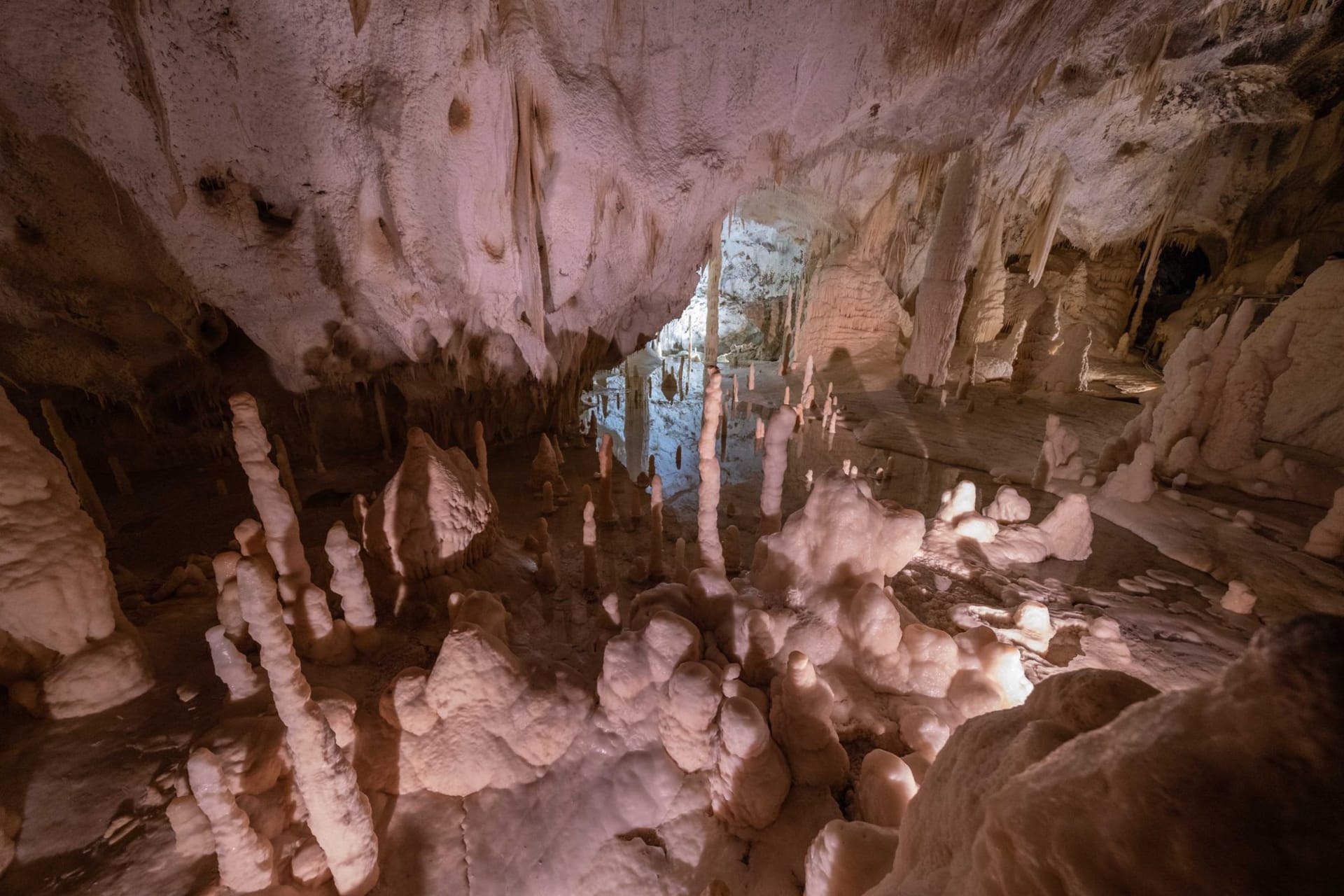
The cave system runs about two kilometres through the limestone interior of Barbados — the island sits on a coral limestone platform, and rainwater has been working its way down through it for millions of years, dissolving passages and chambers and depositing the calcium carbonate back in long stalactites and rounded stalagmites. The Great Hall is the centrepiece: a chamber forty metres wide and fifteen high, its ceiling hung with formations the colour of honey and old bone, a stream running across the floor where blind shrimp live in the complete darkness of the pool. The guide told me they’d been isolated for so long they’ve lost their pigmentation and their eyes have reduced to vestigial structures. I thought about that for the rest of the day.

The tram tour is the standard experience, and it is good — informed guides, well-lit formations, stops at the most dramatic chambers. But I’d suggest also booking the Eco-Adventure Tour, which takes smaller groups on foot through undeveloped sections of the cave with headlamps and a geologist who clearly loves his subject to a degree that borders on the evangelical. He crouched down to show us a formation called a cave pearl — a small perfect sphere of calcite built up around a grain of sand by dripping water, exactly like an oyster pearl but over millennia. I held one in my palm for about thirty seconds. The oldest thing I have ever touched, he said, is roughly two hundred thousand years old. I put it down very carefully.
Above ground, the visitor centre and surrounding botanical gardens are better than they need to be — accessible trails through tropical vegetation with labelled plants, a restaurant that does a decent flying fish sandwich, and a view westward from the ridge that takes in most of the island’s green interior rolling down toward the coast.

The cave maintains a constant temperature of around twenty-six degrees Celsius regardless of the season — cool enough to feel like relief if you’ve been in the island heat, comfortable enough to spend two hours without a jacket. It’s one of the few places in Barbados where rain above ground genuinely doesn’t matter; on a wet afternoon, the cave is if anything more atmospheric.
When to go: Open year-round and genuinely season-proof, as the cave is climate-controlled by geology. Book the Eco-Adventure Tour in advance as spots are limited; the standard tram tour can be booked on shorter notice. Arrive early to beat the cruise ship tours, which tend to fill the morning slots.