Crane Beach
"Some places earn their reputation over centuries. Crane Beach is one of them."
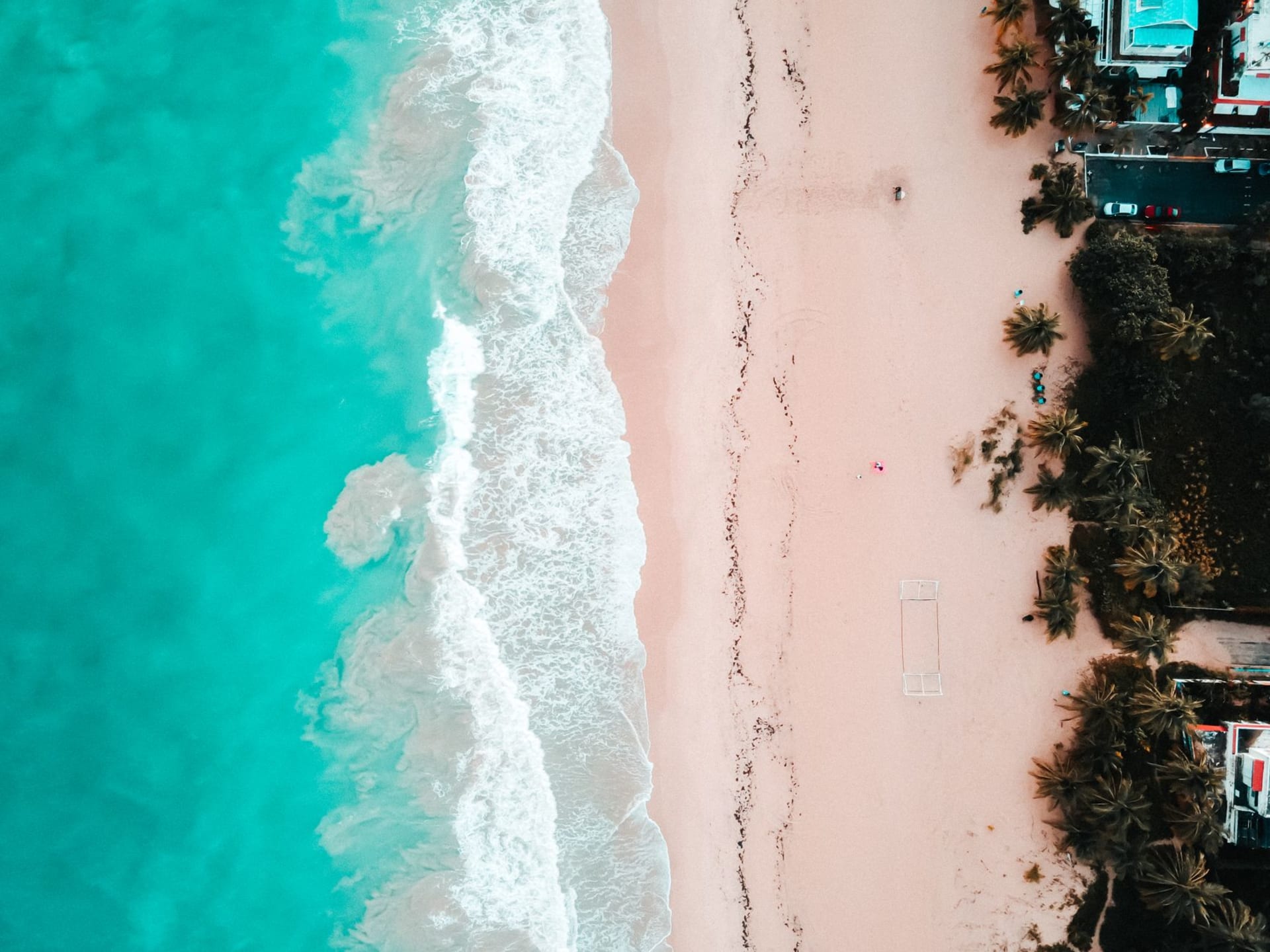
The first time I saw Crane Beach I was looking down at it from the cliff above, from the terrace of the old Crane Hotel — the oldest hotel in Barbados, operating in some form since 1887, and one of the few places in the Caribbean that earns the word “historic” without exaggeration. The beach is below the cliff, accessed by a staircase that descends through the rock, and seeing it from above first means the scale takes you by surprise: a wide arc of sand in a sheltered cove, the surf rolling in from the southeast in long even lines, the sand itself a pale pink at the waterline where the crushed coral and shell mix with the white.
I came back down the staircase and spent the morning in the water. The waves here are unlike the west coast — there’s movement, proper swell, the kind of surf that picks you up and deposits you somewhere new. Nothing violent in the conditions I found, but enough energy that the sea is alive in a way the Platinum Coast is not. The undertow is real and the beach has signs about it, worth paying attention to. But for anyone who swims reasonably well, the waves at Crane are exactly what the Atlantic should be doing in the Caribbean — arriving with purpose and leaving you saltier than you came in.

The beach is semi-private — guests of the hotel pay nothing, and a day pass for non-guests includes pool access. It is expensive by Barbados standards and the clientele is international and moneyed. But early morning before eight, when the hotel guests are still at breakfast, the beach is essentially public; I arrived at seven on my second morning and walked the full length of it in the low light with perhaps four other people for company, the surf coming in clean lines and the cliff throwing shade across half the sand. The pink quality of the sand in that early light — coral particles, shell fragments, the particular granular mix of this cove — is something I don’t have adequate words for.
The surrounding area of St. Philip parish is one of the less developed parts of the island, with small villages and rum shops and the remnants of old sugar estates. Sunbury Plantation House, a few kilometres inland, is the only plantation great house in Barbados where the interior is fully accessible to visitors — fully furnished, preserved as it was, the mahogany staircase intact. The plantation history of Barbados is uncomfortable and should be; Sunbury presents it without prettification.

There is a pool at the Crane Hotel that is cut into the cliff, infinity-edged, with the ocean spread below it in a way that is genuinely absurd with beauty. I am not usually interested in pools in countries where there is ocean, but this one is different. I understood it.
When to go: The south and east coasts are swimmable year-round, but the swell builds in November through April when Atlantic storms push energy northward — best surf but check conditions. May through October brings calmer waters and the wet season’s deeper greens. Arrive early (before eight) for the beach without the hotel crowds; the sunset from the cliff terrace above is one of the better ones on the island.