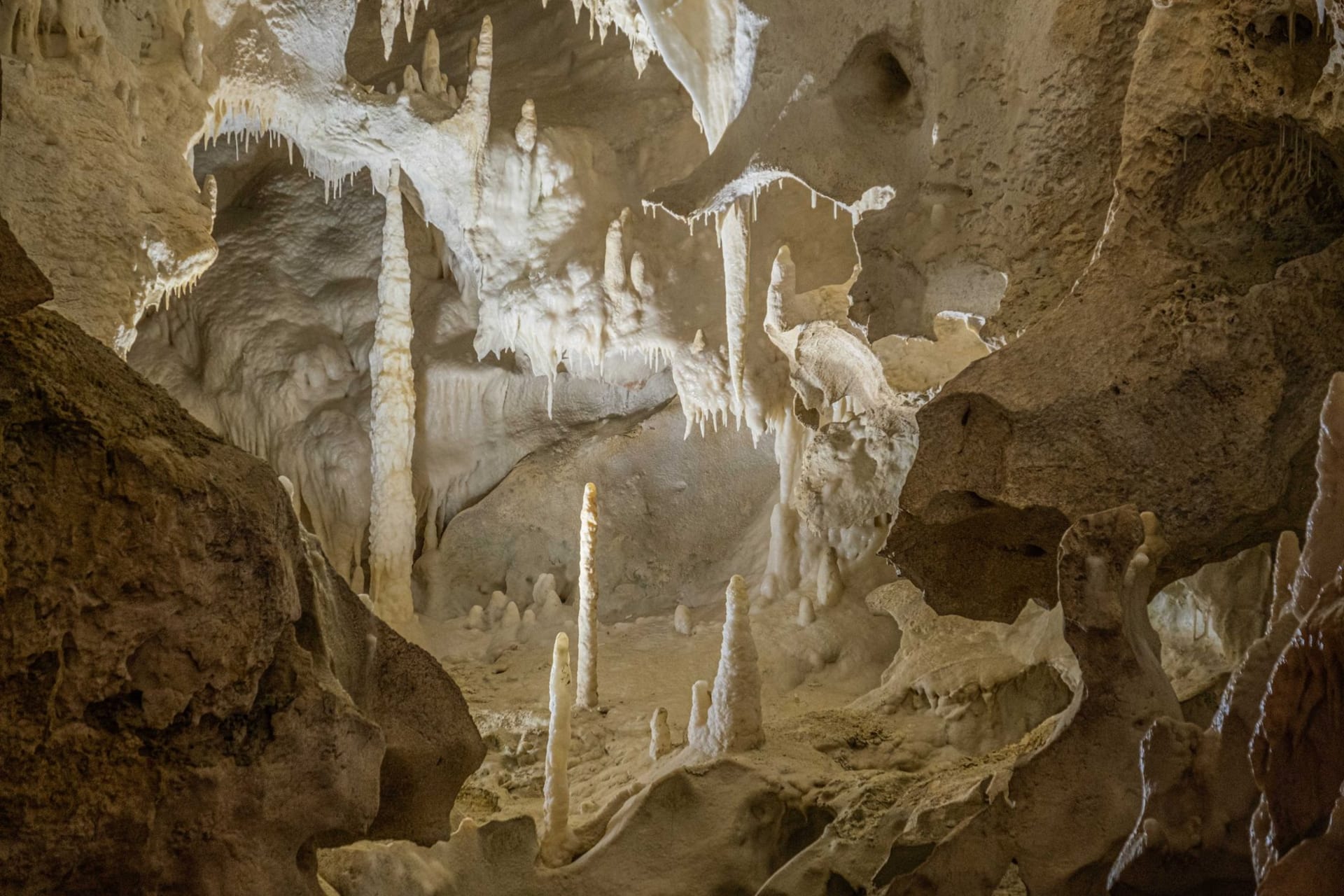
Animal Flower Cave
"The Atlantic has been trying to get in for ten thousand years. It's making progress."
The road to Animal Flower Cave runs through the parish of St. Lucy, which is the part of Barbados that the tourism industry largely forgets about, and it shows: modest chattel houses behind hurricane shutters, rum shops with hand-painted signs, cane fields that stretch to the road’s edge. I rented a car for this drive specifically, because no bus route goes this far north and the landscape deserves to be taken at your own pace, with stops. By the time I reached the North Point, the Atlantic was audible before it was visible — a low consistent percussion that I felt in my chest before I heard it properly.
The cave sits in the cliff at the island’s northern tip, accessed by a steep staircase cut into the limestone. Below the staircase, a series of natural chambers open into the cliff face, some with windows directly onto the sea that the Atlantic has punched through the rock. On the day I visited, with a moderate swell running, the incoming waves surged through these openings and turned the cave into a briefly wild, foam-white space. On calmer days — and it varies enormously — the pools in the cave floor are still and clear enough to see the sea anemones that give the place its name, their tentacles moving in the current with the slow deliberateness of something that has been doing this for a very long time.
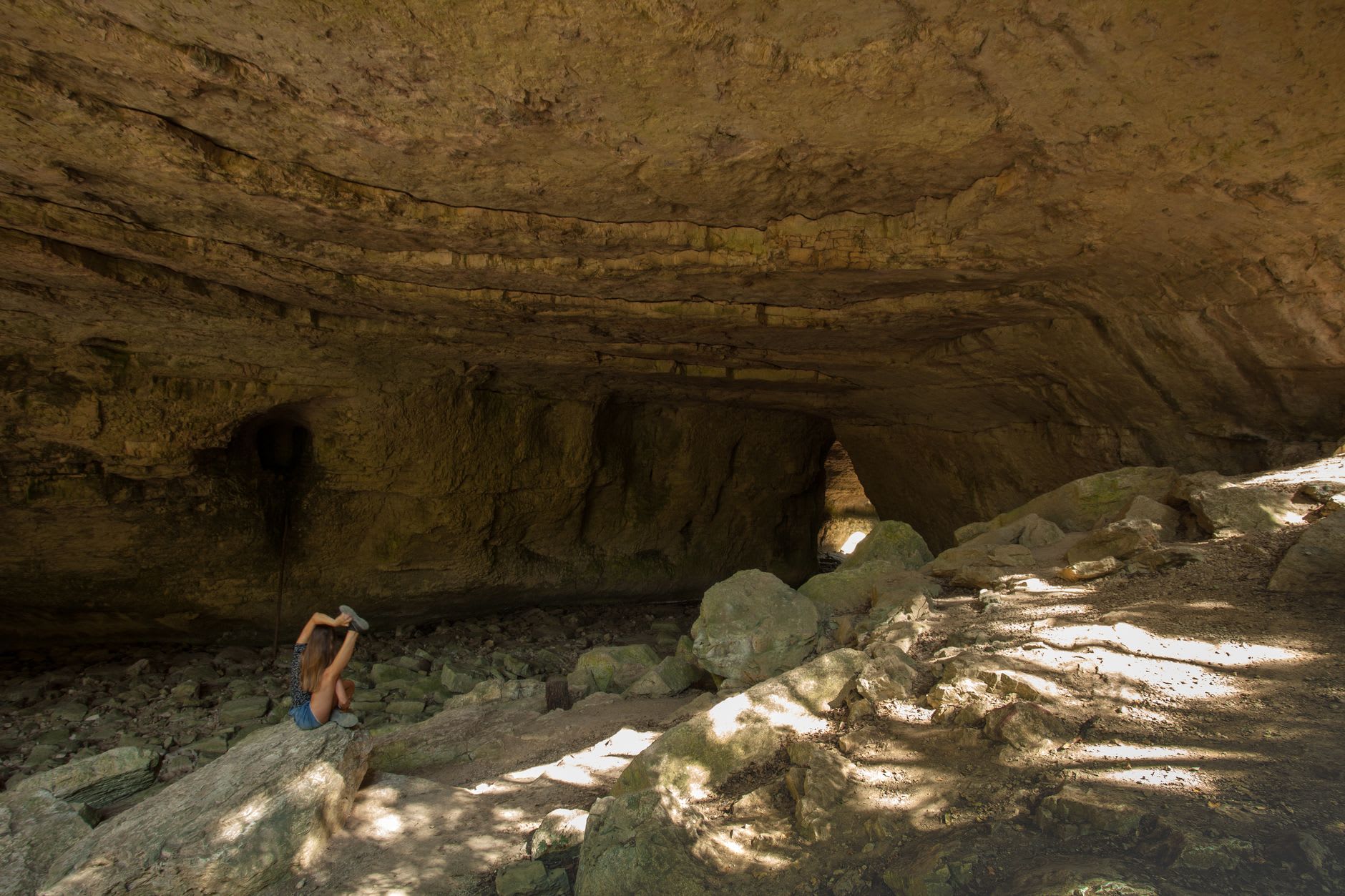
The family who owns and runs the cave has been here for generations. The entrance fee is modest and the experience is genuinely without commercial padding — no gift shop with dubious seashell jewellery, no staged performance, just a small restaurant above the cliff and a cave below it. I had lunch at the restaurant: grilled fish, rice and peas, a Carib beer. The view from the terrace north is nothing but ocean to the horizon. The woman who served me had the manner of someone who has watched countless tourists have the same realisation at the same table — that this is the edge of something.
What I found most affecting was the sense of the cave as an ongoing process rather than a finished thing. The water has been working through this limestone for millennia and the work is visibly continuing: fresh breaks in the cliff wall where rock has recently fractured, new channels carved since the last storm season, formations in the pools still being built grain by grain. It is one of those rare places that makes geological time feel personal.
Drive back south via the east coast road rather than retracing your route — it adds only twenty minutes and the Scotland District views in the late afternoon, with the sea to your left and the cane-covered ridges to your right, are exactly the kind of thing you come to Barbados for even when you don’t know it yet.
When to go: The cave is accessible year-round but the ocean windows are safest in the dry season when swells are generally lower — check locally before descending in heavy weather, as the lower chambers can flood. Calm-sea days reveal the sea anemones and the full depth of the rock pools. The drive through St. Lucy is better in the early morning before the heat builds.