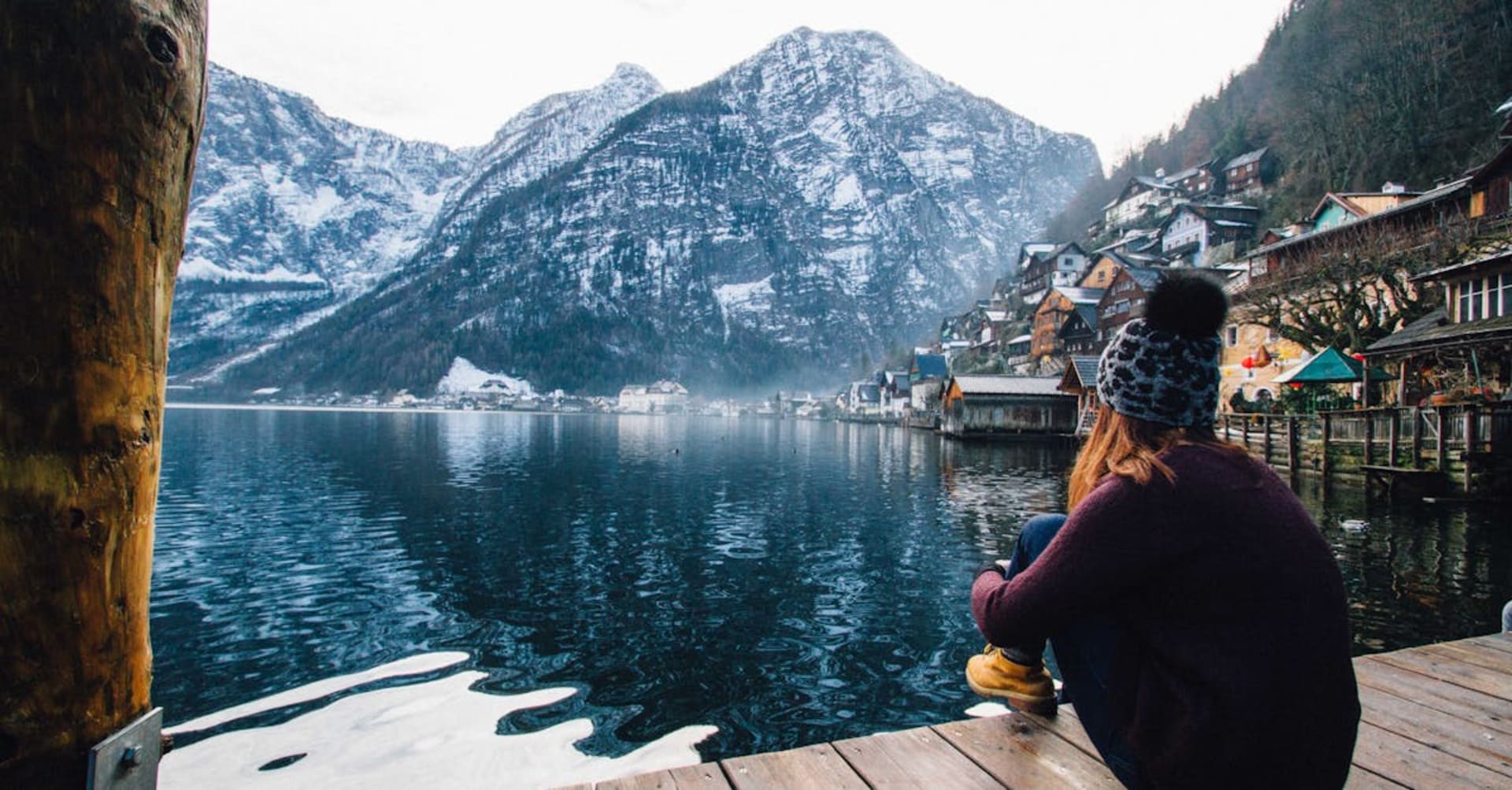
Hallstatt is wedged between the Hallstätter See and a near-vertical mountain so tightly that the village had to build its church on a terrace and stack its houses on top of one another. The result is one of the most photographed villages in the world — pastel facades reflected in lake water so still it functions as a mirror, with the Dachstein massif rising behind in a wall of grey limestone.
The village has been inhabited for over seven thousand years, originally for its salt mines — the oldest in the world — which gave the Hallstatt culture its name and preserved artifacts so well that archaeologists still make discoveries. The Skywalk viewing platform juts out over the lake from the salt mine entrance, 350 meters above the water. The Beinhaus — the bone house — in St. Michael’s Chapel holds over 1,200 painted skulls, a tradition born from the village’s chronic shortage of cemetery space. Take the first ferry of the morning from the train station across the lake — the approach by water is the definitive view.
When to go: May through June or September through October for manageable crowds. Winter brings snow and a fairy-tale stillness.