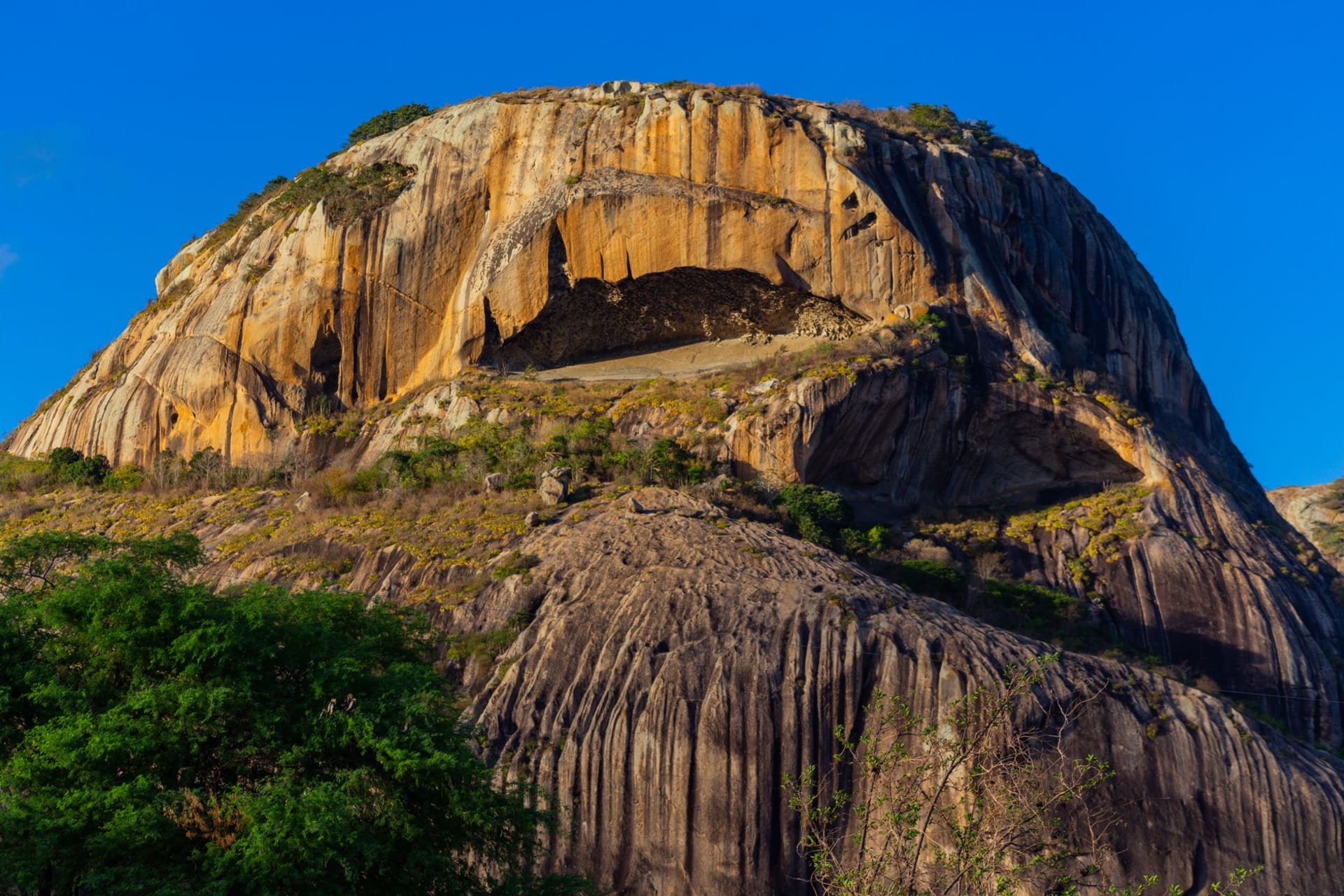
The Pedras Negras de Pungo Andongo — the Black Rocks — appear on the horizon forty minutes before you reach them, which seems wrong until you understand their scale. From a distance they look like a cluster of dark hills that geography forgot to erode. Up close, they are something else entirely: a group of massive black granite monoliths, some reaching eighty metres high, that rise from the flat savanna floor with a suddenness that the surrounding landscape does nothing to prepare you for. I drove toward them for most of an hour, watching them grow, and still wasn’t ready for the moment when I stopped the car and stood at their base.
The rocks are perhaps 90 kilometres southwest of Malanje, and the road from the city takes you through the transition zone between the wetter northern interior and the drier central plateau — cassava farms, villages with clay-walled houses, children driving goats along the road’s edge with authority. The landscape is the colour of dried grass with occasional dark green islands of riverine forest where water has decided to persist. Against all of this horizontal ordinariness, the Black Rocks are a geological punchline, or a geological argument, or both.
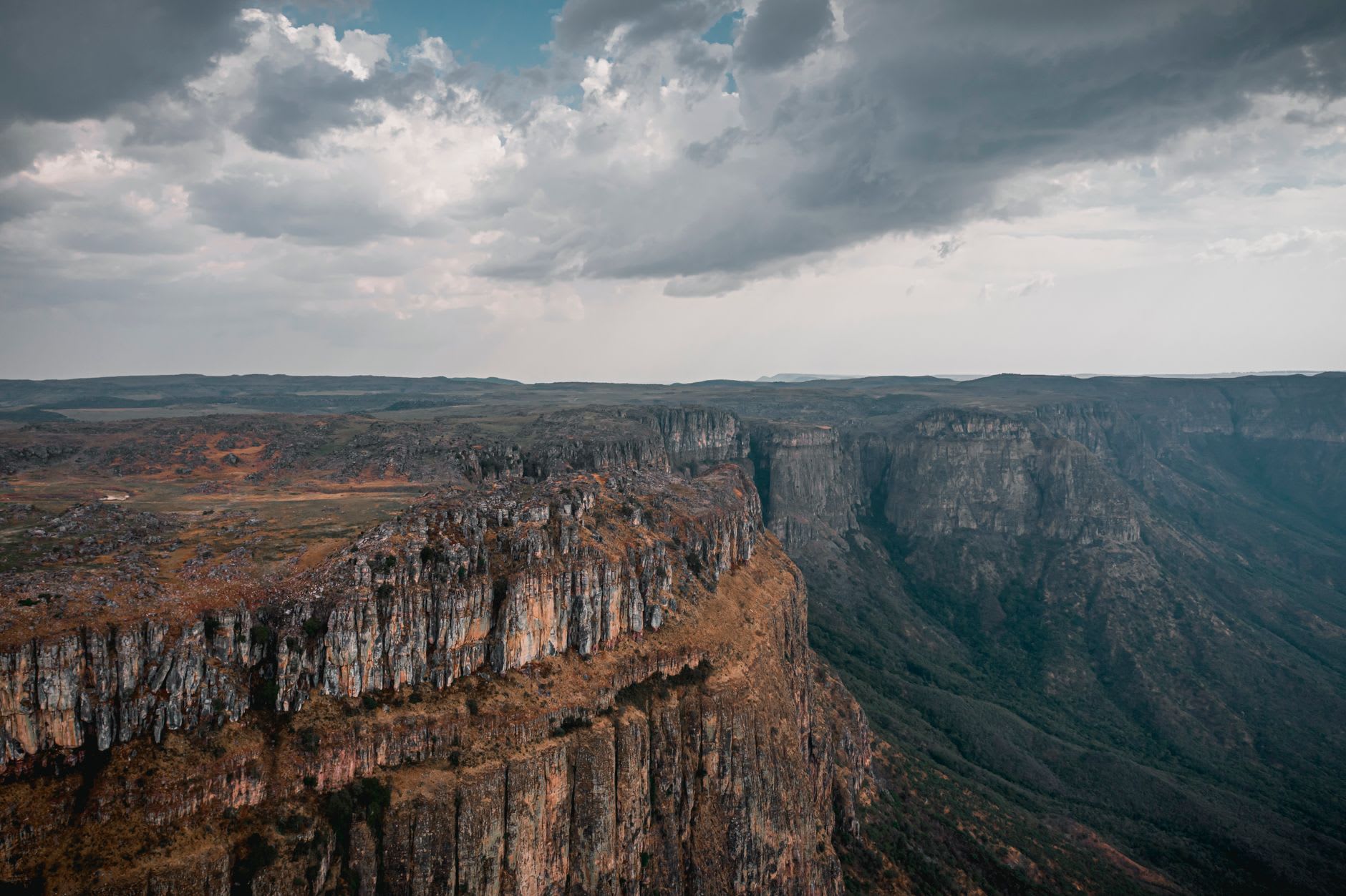
The rocks are not merely geological curiosities. They are one of the most significant historical sites in Angola. In the 17th century, after the Portuguese had pushed inland from Luanda, the rocks became the stronghold of Queen Nzinga Mbande — Nzinga a Mbande, known simply as Nzinga — the Mbundu queen who fought Portuguese colonisation and the slave trade with military and diplomatic sophistication that confounded her opponents for decades. She used the Pungo Andongo massif as a defensible position, its rocks providing cover and elevation, and from here she conducted negotiations with the Portuguese and the Dutch, switching alliances strategically as circumstances required.
A footprint carved into one of the rocks is traditionally identified as Nzinga’s — the rock shows the indentation of a foot, worn smooth by centuries of touching by people who have been bringing this history to their palms. I stood for a while at the carved footprint, the savanna flat and hot around me, thinking about what it takes to resist a colonial power for three decades from a fortress made of rock, and how that story was never part of what I was taught about African history, and how that absence is itself a kind of argument.

Between the rocks are passages and chambers and narrow gullies where the temperature drops and the light filters down in a green cathedral quality from the vegetation that has taken hold in every crack. I walked through one such passage in the middle of the day when the open savanna was unbearable with heat, and the air in the passage was cool and smelled of wet rock and shade, and the sound of the outside world — insects, distant vehicle, wind in dry grass — was muffled to a distant thing. Whatever happened in these rocks, whatever retreats and councils and ceremonies and fears were conducted here over three centuries of resistance, the rocks kept the secret of it in their temperature.
When to go: The dry season, May through October, makes the access roads reliable and the heat manageable — though “manageable” in the Malanje interior in July means 28°C in the shade, so plan accordingly. The wet season brings a green vividness to the surrounding savanna that is genuinely beautiful, but the laterite roads can become impassable without 4WD. Combine the rocks with Kalandula Falls, 50 kilometres northeast — together they make one of the most compelling two-day itineraries in Angola, a combination of geological drama and extraordinary natural spectacle.