Namibe
"The desert ends here, and the ocean begins, and for a moment you're not sure which is which."
The road to Namibe comes down from the highlands through a landscape that empties in stages. First the highland vegetation thins to dry grass and scattered euphorbias. Then the grass goes, replaced by stones and sand and the occasional welwitschia plant — that prehistoric oddity, something between a tree and a cactus, that can live for two thousand years by extracting moisture from the coastal fog. Then the road curves west and the Atlantic appears ahead like a silver wall, and you descend into a town that has the feel of a place that got to the edge of the continent and decided to stop, because what else would you do.
Namibe — still called Moçâmedes by older residents, the Portuguese colonial name that the city carried until independence — sits where the Namib Desert makes its northernmost push into Angola and meets the Benguela Current head-on. The current keeps the water cold and drives a fog that rolls in from the sea on most mornings, laying over the town like a damp cloth before the wind burns it off by mid-morning. The fog and the desert and the ocean together produce a light quality I hadn’t encountered anywhere else — pale, diffuse, slightly hallucinatory, the kind of light that makes distances hard to judge.

The fish market along the waterfront runs on the principle that the fastest system is the one that has been doing the same thing for fifty years. Canoes bring in sardinella by the hundred-kilogram load, and the sorting and salting and packing happens on the dock with a focused intensity that the heat — even the mild heat of the Benguela coast — seems only to accelerate rather than suppress. I bought smoked fish wrapped in newspaper from a woman who had set up her small charcoal operation at the market’s edge, and ate it on the sea wall while pelicans observed me from the bollards with the judicial expression that pelicans always seem to have.
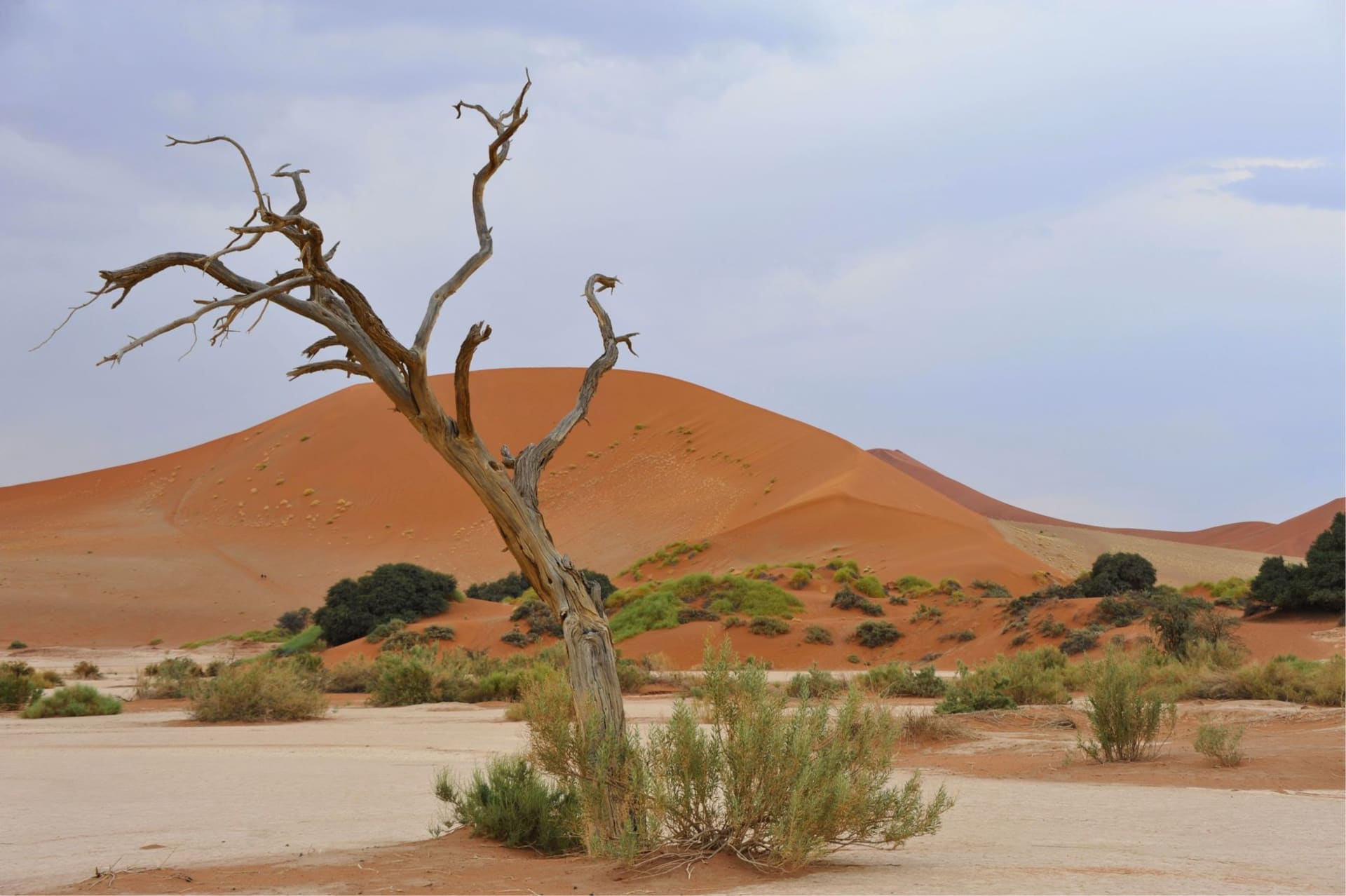
The desert begins at the town’s southern edge. Not metaphorically — literally: you walk south from the last street and the sand dunes begin, moving northeast in long ridges that catch the morning light in gradients from pale gold to deep terracotta. The flamingo lagoon at Bentiaba, about sixty kilometres south, draws birds in numbers that feel like an overstatement until you actually see them — hundreds of flamingos in the shallow lagoon water, pink against the beige of the desert, the ocean visible beyond. I drove out in the early morning when the light was still low and stood at the edge of the lagoon in what I can only describe as a stunned silence, the kind that comes when the natural world produces something you don’t have the vocabulary for yet.

The town itself has a colonial centre of unusual coherence — streets of low Portuguese buildings in that particular terracotta-and-cream palette, a cathedral, a market square where the baobab trees are enormous and old enough to have been there before the Portuguese arrived. The pace here is unlike Luanda’s in every possible way. People move at the speed the climate suggests: deliberately, without hurry, aware that the day will deliver what it delivers and that rushing has never been shown to improve the quality of a dried fish.
When to go: The dry season, June through September, is ideal — the fog is most dramatic and the temperatures most comfortable (18–24°C). The flamingos at Bentiaba are present year-round but peak during the cooler months. The desert excursions are best done in the early morning before the wind picks up and the sand starts moving; afternoon desert walks require sun protection that goes beyond what most visitors pack. Namibe is 700 km south of Luanda — fly or allow two days to drive and absorb the coastal landscape.