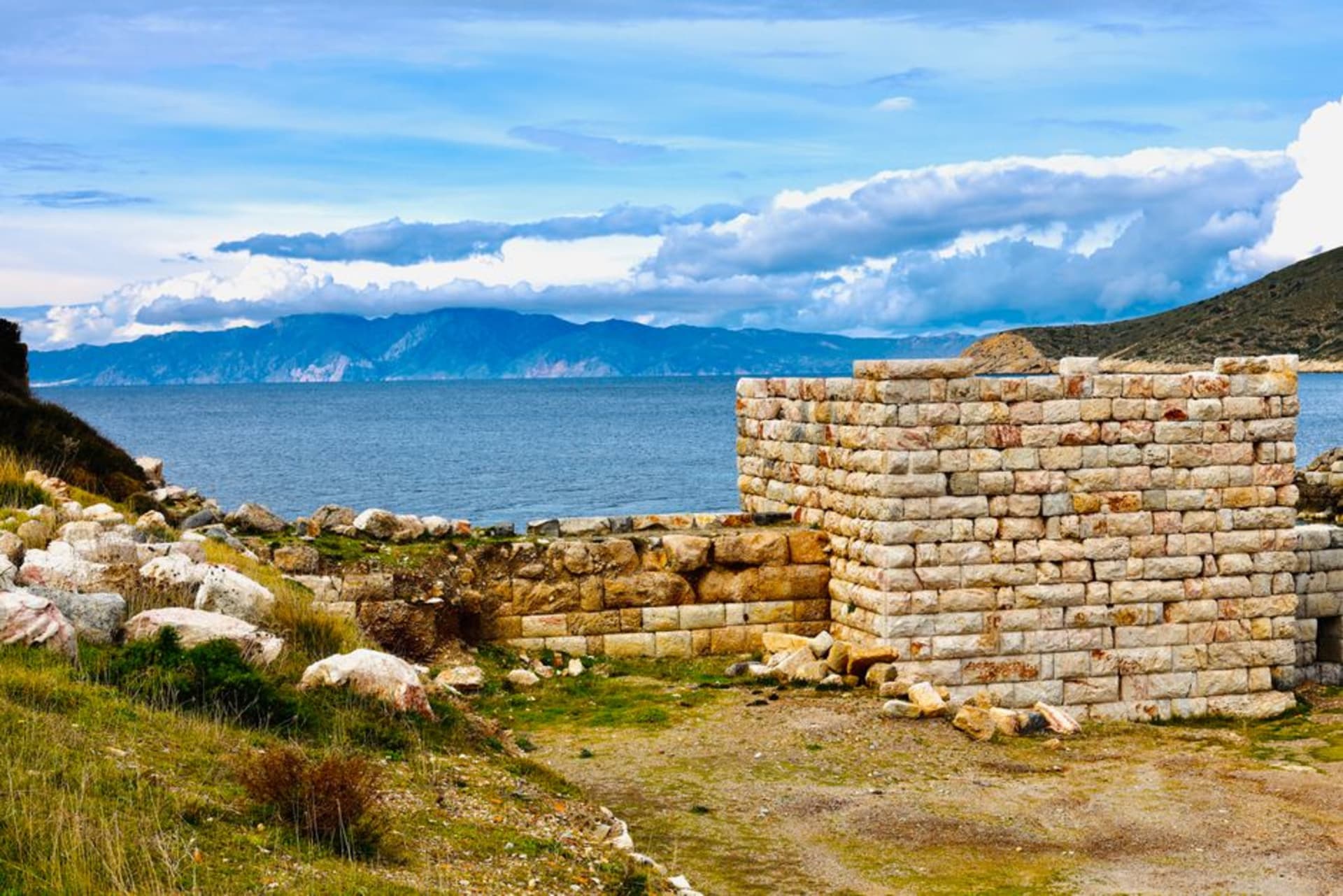
Knidos
"The most famous statue in the ancient world stood here, and pilgrims apparently traveled specifically to see her from behind."
A ruined city split across two harbors at the very tip of the Datça peninsula, once home to the ancient world's most famous nude statue and now home to almost nobody at all.
Knidos sits at the absolute end of the Datça peninsula, far enough out that the drive alone — ninety minutes of switchbacks along a ridge with sea on both sides — filters out anyone not genuinely committed to seeing it. When I arrived on a weekday afternoon in June, I counted maybe a dozen other visitors scattered across a site that once housed a wealthy trading city with two full harbors, a theater, temples, and a population large enough to commission one of the most consequential works of art the ancient world ever produced.
That work was the Aphrodite of Knidos, carved by Praxiteles around 350 BC — the first known life-sized statue of a nude female form in Greek art, and by ancient accounts a sensation so complete that the city built a circular temple specifically designed so visitors could walk entirely around her, and travelers reportedly came from across the Mediterranean purely to see the statue from behind, which the sculptor was said to have rendered with particular attention. The original is lost — likely destroyed in Constantinople centuries later — but the round foundation of her temple is still there on the hillside, and standing in the empty circle, imagining the crowds that once shuffled reverently around it, was a stranger and more moving experience than I expected from a patch of foundation stones.
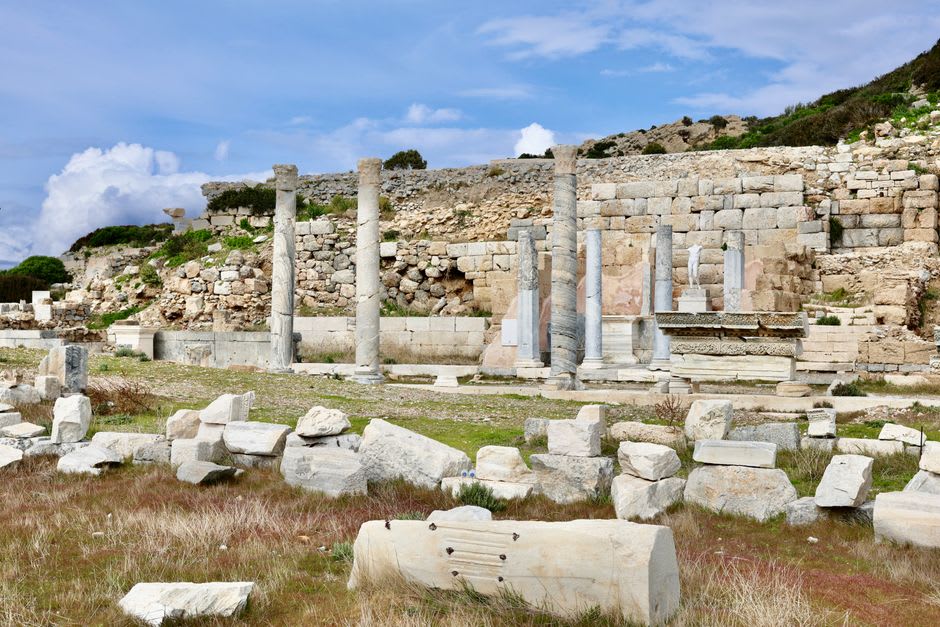
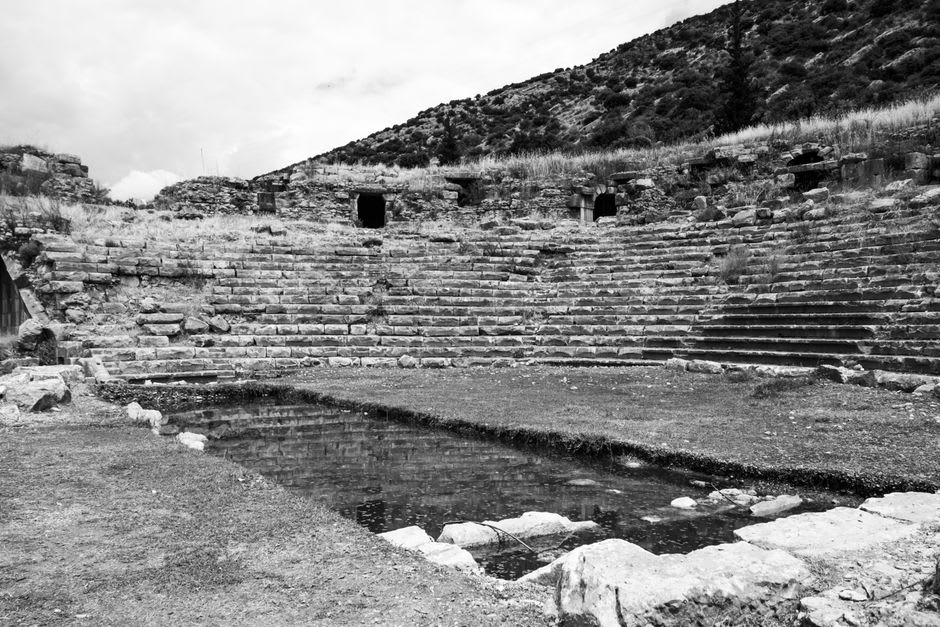
The site itself unfolds across a narrow isthmus connecting a small peninsula to the mainland, with an ancient harbor on each side — one facing the sheltered water where merchant ships once loaded and unloaded, the other open to the swell of the Aegean proper. I climbed the ancient theater, mostly intact and cut into the hillside, and sat looking out at both harbors simultaneously, water on either side, understanding instantly why a trading city would fight for this particular strip of land regardless of how remote it seems today.
There is exactly one restaurant near the ruins, run out of a small building by the harbor, serving simple grilled fish to the handful of yacht crews and archaeology-minded stragglers who make it this far. I ate there alone, the only customer for most of an hour, watching a gulet navigate slowly into the harbor while the site closed up behind me for the evening.
When to go: Late morning to early afternoon on a weekday, once the drive has thinned out the crowd naturally. Bring water and sun protection — there is very little shade and the nearest shop is a long way back up the peninsula.